- Inicio
- Salud cognitiva y nootrópicos
- Pinealon, 20mg
Salud cognitiva
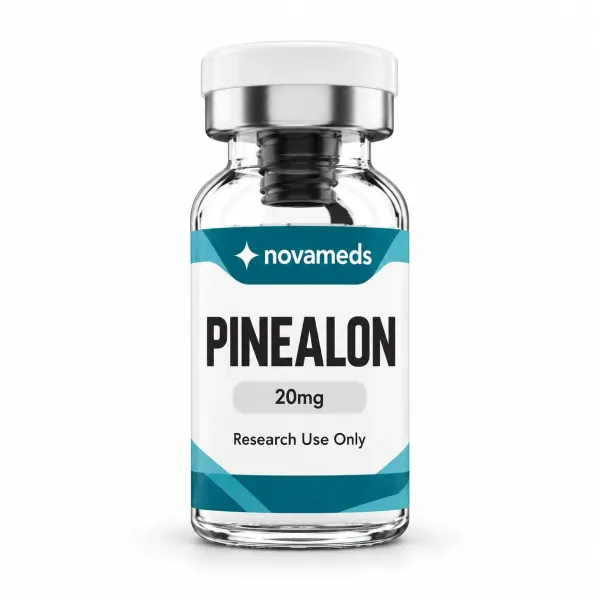
Pinealon, 20mg
Pinealon is a synthetic tripeptide composed of three amino acids, studied for its potential neuroprotective and nootropic properties in research models.
Presentación: Pinealon, 20mg.
Envase ilustrativo generado con IA.
- Farmacia asociada
- Atención personalizada
- Entrega discreta
- PresentaciónPinealon, 20mg
Envío y entrega
- Envío habitual en 24 horas tras confirmarse el pago.
- USPS Regular Shipping · 11,95 € · Aprox. 3–5 días laborables
- FedEx 2 Days Delivery · 28,99 € · Aprox. 2 días laborables
- FedEx Overnight Delivery · 40,99 € · Aprox. 1 día laborable
Solo para investigación de laboratorio.
No apto para uso humano o veterinario.
Composición y detalles del producto
Descripción
Pinealon is a synthetic tripeptide composed of three amino acids, studied for its potential neuroprotective and nootropic properties in research models. Research interest centers on its proposed role in circadian rhythm regulation, memory retention, and learning process research, alongside investigation of its capacity to support various cell types against hypoxic stress in experimental settings.
Research applications include neuroprotective pathway studies, circadian regulation research, and comparative bioregulatory tripeptide pharmacology.
- High Purity – 99% Purity Guaranteed
- Independently Lab Tested
- Research Grade Quality
- For Laboratory Research Use Only
Propiedades
| Chemical Formula | C15H26N6O8 |
|---|---|
| Synonyms | Glutamylaspartylarginine, T-33 peptide |
| Molar Mass | 418.407 g/mol |
| CAS Number | 175175-23-2 |
| PubChem CID | 18220191 |
| Total Compound Content | 20mg per vial |
| Shelf Life | 36 months |
Investigación
Pinealon is studied as a synthetic tripeptide with proposed neuroprotective and nootropic research properties. Research models examine its proposed role in regulating circadian rhythm-associated pathways, with particular research interest in memory retention and learning process endpoints in cognitive research models. Studies have also examined Pinealon’s proposed capacity to protect various cell types from hypoxic damage in experimental conditions, alongside research into its potential relevance for offsetting age-related changes within central nervous system tissue models. Independently third-party HPLC-tested; COA available per batch.
FAQ
What cognitive research models are used to study Pinealon’s proposed effects on memory and learning?
Experimental studies commonly utilize in vitro neural network models, organotypic neural tissue cultures, and cellular systems designed to assess neuroplasticity-associated pathways. Endpoints often include changes in synaptic protein expression, neuronal signalling markers, and gene-expression profiles associated with learning and memory processes.
How is Pinealon’s proposed hypoxia-related activity investigated in experimental models?
Research frequently employs cell-culture systems exposed to controlled hypoxic or oxygen-glucose deprivation conditions. Common endpoints include cell viability, oxidative stress markers, apoptosis-associated biomarkers, and cellular stress-response pathways. These models allow assessment of concentration-response relationships and characterization of potential mechanisms associated with cellular adaptation to hypoxic stress.
What research models are used to study Pinealon’s proposed role in circadian regulation?
Circadian research commonly utilizes cell-based clock-gene reporter systems and tissue-culture models examining expression patterns of core clock genes, including Per, Cry, Bmal1, and Clock. Molecular analyses are used to evaluate changes in circadian-associated signalling pathways and rhythmic gene-expression patterns following experimental exposure.
Relacionados
Salud cognitiva Quizá también buscas
-
Pancragen 20mg
Pancragen 20mg
No disponible actualmente
El precio original era: 65 €.45,50 €El precio actual es: 45,50 €.
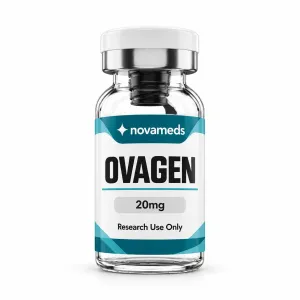
Ovagen 20mg
Ovagen 20mg
No disponible actualmente
El precio original era: 65 €.45,50 €El precio actual es: 45,50 €.