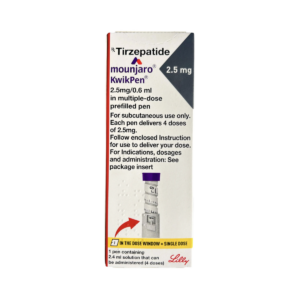
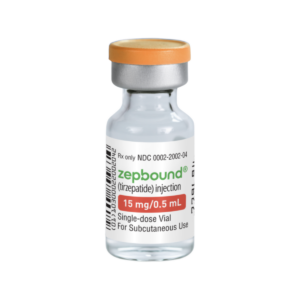
Tirzepatide is a dual glucose-dependent insulinotropic polypeptide (GIP) and glucagon-like peptide-1 (GLP-1) receptor agonist authorised for type 2 diabetes, chronic weight management, and moderate-to-severe obstructive sleep apnoea (OSA) in adults with obesity. Marketed under the brand names Mounjaro and Zepbound, tirzepatide follows a mandatory dose-escalation schedule designed to optimise clinical efficacy while minimising gastrointestinal adverse reactions.
Because tirzepatide delays gastric emptying and activates central satiety pathways, commencing treatment at high doses or accelerating titration too quickly can cause severe nausea, vomiting and dehydration. This guide explains the evidence-based dosing schedules, maintenance targets, delivery devices, and administration protocols established in clinical trials and official prescribing documentation.
Approved Doses and Titration Schedule
Tirzepatide is available in six distinct dose strengths: 2.5 mg, 5 mg, 7.5 mg, 10 mg, 12.5 mg, and 15 mg, each delivered in 0.5 mL or 0.6 mL of sterile solution depending on the specific pen format.
The titration schedule is identical for both type 2 diabetes (Mounjaro) and chronic weight management (Zepbound / Mounjaro UK):
| Treatment Stage | Weekly Dose | Minimum Duration | Clinical Purpose |
|---|---|---|---|
| Initiation | 2.5 mg | 4 weeks | Gastrointestinal acclimatisation; non-therapeutic starting dose |
| First Therapeutic Step | 5.0 mg | At least 4 weeks | Initial therapeutic maintenance dose for glycemic control & weight |
| Escalation Step 2 | 7.5 mg | At least 4 weeks | Intermediate dose if additional glycemic or weight response required |
| Therapeutic Target 1 | 10.0 mg | At least 4 weeks | Standard high-efficacy maintenance dose |
| Escalation Step 3 | 12.5 mg | At least 4 weeks | Intermediate step toward maximal dosing |
| Maximum Approved Dose | 15.0 mg | Ongoing | Maximal efficacy maintenance dose |
Standard Titration Pathway:
[Month 1] 2.5 mg weekly (Acclimatisation)
    │
[Month 2] 5.0 mg weekly (First maintenance assessment)
    │
[Month 3] 7.5 mg weekly (Optional escalation)
    │
[Month 4] 10.0 mg weekly (High-efficacy maintenance)
    │
[Month 5] 12.5 mg weekly (Optional escalation)
    │
[Month 6+] 15.0 mg weekly (Maximal dose)
Patients do not automatically need to titrate to 15 mg. Titration should be paused at 5 mg, 10 mg, or 12.5 mg if the patient achieves satisfactory metabolic goals or if gastrointestinal symptoms emerge.
Why Gradual Escalation Is Medically Necessary
The gastrointestinal tract requires time to adapt to pharmacological incretin stimulation.
When tirzepatide binds to GLP-1 receptors in the stomach and vagal nerve terminals, it inhibits gastric motility, slowing the passage of food into the duodenum. Rapid escalation without adequate adaptation leads to gastric distension, profound nausea, delayed vomiting, and secondary dehydration, which can provoke acute kidney injury.
In the pivotal SURPASS (type 2 diabetes) and SURMOUNT (obesity) clinical development programs, the 4-week titration interval reduced treatment discontinuation rates due to adverse events to less than 7% across all groups.
Choosing a Maintenance Target Dose
Clinical trial outcomes demonstrate a clear dose-response relationship, but the difference between intermediate and high doses varies:
Weight Loss Efficacy (SURMOUNT-1 Trial Data at 72 Weeks)
- 5 mg weekly: Mean weight reduction of 15.0% (16.1 kg)
- 10 mg weekly: Mean weight reduction of 19.5% (22.2 kg)
- 15 mg weekly: Mean weight reduction of 20.9% (23.6 kg)
Clinical Implication: While 15 mg provided the greatest mean reduction, the 10 mg dose captured over 90% of the total weight loss observed with 15 mg, while causing fewer gastrointestinal adverse events. Clinicians frequently maintain patients at 10 mg when progress is steady.
Glycemic Control (SURPASS-1 and SURPASS-2)
In patients with type 2 diabetes, the 5 mg dose achieves dramatic HbA1c reductions (averaging -1.8% to -2.0%). While 10 mg and 15 mg yield additional modest HbA1c lowering (-2.2% to -2.4%), many patients achieve their target HbA1c (<6.5% or <7.0%) on 5 mg or 10 mg without needing further escalation.
Device Handling: KwikPen vs Single-Dose Formats
Understanding the dispensing device is vital for patient safety and avoiding administration errors.
1. The UK and European Multi-Dose Mounjaro KwikPen
- Design: A pre-filled multi-dose pen containing 4 fixed weekly doses of a specific strength.
- Needles Required: Requires separate disposable pen needles (typically 31G or 32G, 4mm or 5mm) screwed on prior to each injection.
- Priming: A new needle must be primed (dialling 1 or 2 clicks to show drug droplet) before the first use.
- Dialling Mechanism: The user turns the dose knob until it stops at the “1” marker, inserts the needle subcutaneously, presses the injection button completely, and holds it in place for 5 seconds before withdrawing.
2. The US Single-Dose Autoinjector (Mounjaro and Zepbound)
- Design: A single-use pen containing exactly one dose. The needle is integrated and pre-attached inside the device.
- Operation: The patient unlocks the safety ring, places the flat base against the skin, and presses the purple injection button. A loud click signals the start of injection, and a second click 5 to 10 seconds later confirms completion.
3. US Single-Dose Glass Vials
- In August 2024, the manufacturer released single-dose vials (2.5 mg and 5 mg) in the US to address drug shortages. These require drawing up 0.5 mL using an insulin syringe with appropriate micro-needle gauges.
Injection Sites and Technique
Tirzepatide is strictly indicated for subcutaneous injection. It must never be injected intravenously or intramuscularly.
Recommended Sites:
- Abdomen: At least 5 centimetres (2 inches) away from the umbilicus.
- Front of the Thighs: Middle, anterior aspect of the thigh.
- Upper Arms: Outer back of the upper arm (often requires assistance from another person).
        Recommended Injection Zones:
           [ Upper Outer Arms ]
                   │
           [ Abdomen (Periumbilical) ]
                   │
           [ Anterior Mid-Thighs ]
Site Rotation: Rotate the injection site each week. If using the abdomen repeatedly, choose different quadrants to prevent localized lipohypertrophy.
Co-administration: Tirzepatide can be injected into the same body region as insulin (if co-prescribed), but the two injections must not be adjacent and must never be mixed in the same syringe or pen.
Managing Missed Doses and Resuming Therapy
Strict rules govern missed injections to balance therapeutic continuity with safety:
If a dose is missed:
- ≤ 4 days (96 hours): Administer the dose immediately. The patient can then resume their regular weekly schedule on their established injection day.
- > 4 days (> 96 hours): Skip the missed dose entirely. Administer the next dose on the regularly scheduled day. Do not inject two doses within 3 days (72 hours) of each other.
If treatment has been interrupted for several weeks:
Because tirzepatide has a 5-day half-life, drug levels drop substantially over 2 to 3 weeks:
- Interruption of 2 to 3 weeks: Clinicians may advise resuming at the same dose or stepping down one dose increment (e.g. from 10 mg to 7.5 mg).
- Interruption of > 4 weeks: Circulating drug levels are near zero. Re-starting at high doses carries a high risk of acute severe vomiting and pancreatitis. Therapy must be re-initiated at the 2.5 mg starting dose and titrated upwards again.
Storage and Cold-Chain Requirements
Proper storage preserves the peptide structure of tirzepatide:
- Refrigerated Storage (Primary): Store between 2°C and 8°C (36°F to 46°F) in the original carton to protect from light. Do not freeze. Discard if the pen has been frozen.
- Room Temperature Allowance: Pens may be kept at room temperature (up to 30°C or 86°F) for a maximum of 21 days (for US single-dose pens) or 30 days (for UK KwikPens). Once removed from the refrigerator, the pen must not be exposed to direct sunlight or excessive heat.
- Post-Puncture (Multi-Dose KwikPen): After first use, store the KwikPen with the pen needle removed (to prevent air entry and leakage) either in the refrigerator or at room temperature, discarding it 30 days after first use.
Frequently Asked Questions
Can I stay on 2.5 mg if I am losing weight?
The 2.5 mg dose is classified as non-therapeutic in the product license because it was designed for tolerability rather than sustained weight loss or glycemic control. However, in off-label real-world practice, if a patient experiences robust appetite suppression and weight loss on 2.5 mg with good tolerance, clinicians may occasionally delay titration.
What should I do if I experience severe nausea after stepping up a dose?
Contact your prescribing clinician. Standard practice is to manage symptoms with dietary modifications (smaller, blander meals, adequate electrolytes) and temporary anti-emetics. If nausea persists or impairs hydration, the clinician may step the dose back down to the previous tolerated strength for an additional 4 weeks.
Can I split doses (e.g. inject twice weekly)?
The licensed formulation and all clinical trials were evaluated exclusively on once-weekly dosing. Multi-dose KwikPens and single-dose autoinjectors are engineered for fixed single weekly delivery; attempting to dismantle or “count clicks” on pre-filled pens is not recommended by manufacturers and risks inaccurate dosing.
Related reading: Mounjaro vs Zepbound: Same Tirzepatide, Different Indications · Semaglutide vs Tirzepatide: Understanding the Differences · Managing GLP-1 Side Effects: Nausea, Constipation and GI Tolerability · What Happens When Stopping GLP-1 Medicines? Evidence on Weight Regain
Scientific references
- Jastreboff AM, et al. Tirzepatide Once Weekly for the Treatment of Obesity (SURMOUNT-1). New England Journal of Medicine. 2022;387(3):205-216. PubMed PMID: 35658024
- Frías JP, et al. Tirzepatide versus Semaglutide Once Weekly in Patients with Type 2 Diabetes (SURPASS-2). New England Journal of Medicine. 2021;385(6):503-515. PubMed PMID: 34170647
- Eli Lilly and Company. Mounjaro (tirzepatide injection) Prescribing Information. US Food and Drug Administration (FDA); Revised November 2023. FDA Drug Label
- Electronic Medicines Compendium (emc). Mounjaro KwikPen solution for injection in pre-filled pen: Summary of Product Characteristics (SmPC). UK Medicines and Healthcare products Regulatory Agency (MHRA); Updated 2024.
- Garvey WT, et al. Tirzepatide once weekly for the treatment of obesity in people with type 2 diabetes (SURMOUNT-2). The Lancet. 2023;402(10402):613-626. PubMed PMID: 37385275
This article is educational and does not constitute personalised treatment advice. Treatment decisions depend on individual circumstances and professional assessment.