While modern incretin mimetics (GLP-1 and GIP receptor agonists) primarily target gastrointestinal transit and metabolic endocrine pathways, obesity is also heavily driven by central neurological and neurochemical mechanisms. The brain’s hedonic reward system frequently overrides homeostatic energy signals, driving compulsive cravings and consumption of calorie-dense foods.
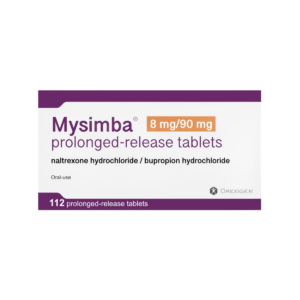
Mysimba (marketed as Contrave in the United States) is a fixed-dose combination of two established central nervous system medications:
- Naltrexone hydrochloride (8 mg): An opioid receptor antagonist traditionally used in opioid and alcohol dependence.
- Bupropion hydrochloride (90 mg): An aminoketone antidepressant and smoking-cessation agent that acts as a weak norepinephrine-dopamine reuptake inhibitor (NDRI).
Authorised by the European Medicines Agency (EMA), the UK Medicines and Healthcare products Regulatory Agency (MHRA), and the US Food and Drug Administration (FDA), Mysimba provides a unique oral, non-incretin option that specifically targets appetite regulation and reward-driven food cravings.
This review examines the neurobiological synergy of naltrexone/bupropion, clinical trial data from the COR program, mandatory titration schedules, and crucial cardiovascular and seizure safety contraindications.
Neurobiology: The Hypothalamus and the Reward System
Mysimba acts simultaneously on two distinct anatomical regions in the central nervous system:
               Central Mechanisms of Mysimba
                             │
         ┌───────────────────┴───────────────────┐
         ▼                                       ▼
Hypothalamus (Arcuate Nucleus)          Mesolimbic Dopamine Circuit
• Bupropion stimulates POMC neurons     • Modulates ventral tegmental area (VTA)
• Alpha-MSH activates MC4R receptors    • Dampens dopamine reinforcement of food
• Naltrexone blocks beta-endorphin      • Reduces hedonic cravings ("food noise")
  opioid negative feedback loop
1. The Homeostatic Pathway (Hypothalamus)
In the arcuate nucleus of the hypothalamus, bupropion increases the activity of POMC (pro-opiomelanocortin) neurons. When activated, POMC neurons release alpha-melanocyte-stimulating hormone (α-MSH), which binds to melanocortin-4 receptors (MC4R) in the paraventricular nucleus, generating an intracellular signal that increases energy expenditure and suppresses hunger.
2. The Hedonic Pathway (Mesolimbic Reward Circuit)
The pleasure and craving associated with highly palatable, energy-dense foods (sugars, fats) are mediated by dopamine release in the nucleus accumbens via projections from the ventral tegmental area (VTA). Bupropion inhibits dopamine and norepinephrine reuptake, while naltrexone blocks mu-opioid receptors that normally amplify dopamine release. Together, they diminish the emotional and compulsive drive to eat in response to stress or visual cues.
Why Neither Drug Works Alone for Weight Loss
The rationale for co-formulating naltrexone and bupropion lies in overcoming endogenous neurochemical negative feedback:
When bupropion activates POMC neurons, it does not release α-MSH alone; POMC is a large pro-hormone that is cleaved into both α-MSH and beta-endorphin (an endogenous opioid peptide).
- Beta-endorphin binds to inhibitory mu-opioid receptors on the very POMC neurons that produced it.
- This creates an immediate autoinhibitory negative feedback loop: beta-endorphin shuts down POMC neuron firing, rapidly blunting bupropion’s appetite-suppressing effect.
The Naltrexone Solution: Naltrexone is a pure opioid antagonist. By occupying and blocking the mu-opioid receptor, naltrexone prevents beta-endorphin from shutting down POMC firing. This allows bupropion to exert continuous, uninhibited stimulation of α-MSH release, producing sustained long-term appetite reduction that neither drug can sustain as monotherapy.
The COR Phase 3 Clinical Trial Program
The clinical efficacy of naltrexone/bupropion sustained-release (NB) was evaluated in four large multicentre randomized, double-blind, placebo-controlled Phase 3 trials known as the Contrave Obesity Research (COR) program, encompassing over 4,500 patients:
| Trial | Population | Duration | Mean Weight Loss (NB 32/360) | Mean Weight Loss (Placebo) | Net Drug Difference |
|---|---|---|---|---|---|
| COR-I | Adults with obesity/overweight | 56 weeks | -6.1% (-6.2 kg) | -1.3% (-1.4 kg) | -4.8% |
| COR-II | Adults with obesity/overweight | 56 weeks | -6.4% (-6.6 kg) | -1.2% (-1.3 kg) | -5.2% |
| COR-BMOD | NB + Intensive Behaviour Modification | 56 weeks | -9.3% (-10.0 kg) | -5.1% (-5.5 kg) | -4.2% |
| COR-Diabetes | Overweight/obese with Type 2 Diabetes | 56 weeks | -5.0% (-5.4 kg) | -1.8% (-1.9 kg) | -3.2% |
Key Efficacy Observations:
- Categorical Response: In COR-I, 48% of participants treated with naltrexone/bupropion achieved a clinically meaningful weight loss of ≥5% at 56 weeks (compared to 16% on placebo), and 25% achieved ≥10% weight loss (compared to 7% on placebo).
- Craving Control: Standardized Food Craving Questionnaires (FCQ) confirmed significant reductions in the intensity and frequency of food cravings, increased ability to resist carbohydrate-dense foods, and reduced binge-eating episodes.
- Cardiometabolic Biomarkers: Treatment was associated with meaningful reductions in triglycerides (-14%), increases in HDL-cholesterol (+8%), and significant reductions in fasting insulin and HbA1c (in COR-Diabetes, HbA1c fell by -0.6% net of placebo).
Dosing Schedule and the 4-Week Titration Protocol
Mysimba is supplied as sustained-release tablets containing 8 mg naltrexone hydrochloride and 90 mg bupropion hydrochloride.
To mitigate acute nausea and reduce the risk of seizure provocation, a mandatory 4-week dose-escalation schedule must be observed:
| Week of Treatment | Morning Dose | Evening Dose | Total Daily Tablets | Total Daily Active Dose |
|---|---|---|---|---|
| Week 1 | 1 tablet | None | 1 tablet | 8 mg / 90 mg |
| Week 2 | 1 tablet | 1 tablet | 2 tablets | 16 mg / 180 mg |
| Week 3 | 2 tablets | 1 tablet | 3 tablets | 24 mg / 270 mg |
| Week 4 onwards | 2 tablets | 2 tablets | 4 tablets (Full Dose) | 32 mg / 360 mg |
Administration Rules:
- Tablets must be swallowed whole with water and never cut, crushed, or chewed, as damaging the sustained-release matrix can trigger rapid drug dumping, causing toxicity and elevating seizure risk.
- Tablets should preferably be taken with food. However, they must not be taken with high-fat meals, as high-fat foods dramatically increase bupropion and naltrexone systemic exposure by up to 80%, increasing the risk of adverse reactions.
The 16-Week Efficacy Assessment (Stopping Rule)
Both the UK MHRA and the European EMA require a mandatory efficacy assessment at 16 weeks:
Initiation (Week 0) ──> 4 Weeks Titration ──> 12 Weeks Full Dose (Week 16)
                                                        │
                              ┌─────────────────────────┴─────────────────────────┐
                              ▼                                                   ▼
                    Weight Loss ≥ 5%                                    Weight Loss < 5%
               [ Continue Long-Term Therapy ]                        [ Discontinue Treatment ]
- If a patient has not lost at least 5% of their baseline body weight by week 16, Mysimba should be discontinued.
- Clinical trials demonstrate that patients who fail to achieve 5% weight loss by week 16 are highly unlikely to achieve meaningful long-term clinical benefit, avoiding unnecessary medication exposure and cost.
Adverse Reactions and Tolerability
The overall adverse event profile is dominated by mild-to-moderate, transient events:
- Nausea: The most common adverse effect, reported by 32.5% of patients (versus 6.7% on placebo). It typically occurs during early dose titration and resolves over several weeks.
- Constipation: Reported in 19.2% of patients.
- Headache: Occurred in 17.6% of patients.
- Vomiting, Dizziness, Insomnia, and Dry Mouth: Occurred in 7% to 10% of participants.
- Discontinuations: Approximately 19% to 24% of trial participants discontinued treatment due to adverse events (predominantly nausea, headache, and insomnia), compared to 10% in placebo arms.
Contraindications and Safety Warnings
Due to the pharmacological properties of bupropion and naltrexone, Mysimba carries important medical contraindications:
1. Seizure Risk
Bupropion lowers the seizure threshold in a dose-dependent manner. In clinical trials of Mysimba, seizures occurred at an incidence of approximately 0.1% (1 per 1,000 patients).
- Contraindications: Uncontrolled epilepsy, current or prior diagnosis of bulimia or anorexia nervosa (due to electrolyte imbalances), and acute withdrawal from alcohol, benzodiazepines, or barbiturates.
2. Cardiovascular and Blood Pressure Warnings
Bupropion increases noradrenergic neurotransmission, which can elevate resting heart rate (+1 to +3 bpm) and transiently raise systolic/diastolic blood pressure (+1 to +2 mmHg).
- Contraindication: Severe or uncontrolled hypertension (e.g. systolic BP ≥140 mmHg or diastolic BP ≥90 mmHg despite therapy).
- Monitoring: Blood pressure and heart rate must be measured prior to starting treatment and checked every 4 to 8 weeks during titration.
3. Concomitant Opioid Therapy
Because naltrexone is a potent opioid receptor antagonist:
- Mysimba is strictly contraindicated in patients taking chronic opioid medications, receiving opioid agonist therapy (methadone, buprenorphine), or undergoing acute opioid withdrawal.
- Naltrexone will precipitate acute, severe opioid withdrawal symptoms and render opioid analgesics completely ineffective in emergencies. Therapy must be paused at least 7 to 10 days before planned elective surgeries requiring opioid pain management.
4. Neuropsychiatric Warnings
Bupropion carries a boxed warning in the US regarding suicidality and depression in young adults (under 25). Any emergence of suicidal ideation, agitation, or depressive symptoms warrants immediate cessation. Mysimba must never be co-administered with monoamine oxidase inhibitors (MAOIs; require a 14-day washout).
Clinical Positioning: Mysimba vs GLP-1 Medications
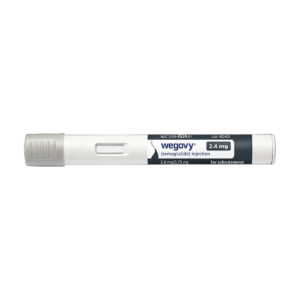
| Feature | Mysimba (Naltrexone/Bupropion) | Wegovy (Semaglutide 2.4 mg) |
|---|---|---|
| Primary Target | CNS hypothalamic POMC and reward pathways | Systemic GLP-1 receptors (gut, vagus, hypothalamus) |
| Administration | Oral tablets twice daily | Subcutaneous injection once weekly |
| Mean Weight Loss | ~6% to 8% at 56 weeks | ~15% to 17% at 68 weeks |
| Target Patient | Emotional eaters, binge cravings, needle phobia | Severe obesity (BMI ≥35), T2D, high metabolic risk |
| Gastrointestinal | Lower nausea rates than GLP-1s, no gastroparesis | Common upper GI delay, nausea, constipation |
| Cost / Availability | Lower-cost oral medication; widely available | Higher cost; recurring global supply constraints |
Clinical Bottom Line: Mysimba produces roughly half the total weight loss of modern injectable incretins (6%–8% vs 15%–20%). However, for patients who struggle specifically with compulsive cravings, emotional eating, smoking cessation overlap, needle anxiety, or financial/supply barriers to GLP-1s, it remains a highly valuable, evidence-backed tool in medical obesity management.
Frequently Asked Questions
Is Mysimba the same as Contrave?
Yes. Mysimba is the registered European and UK brand name, while Contrave is the registered brand name in the United States and Canada. Both products contain an identical sustained-release formulation of 8 mg naltrexone and 90 mg bupropion.
Can I drink alcohol while taking Mysimba?
Alcohol consumption should be minimized or avoided completely while taking Mysimba. Excessive alcohol intake, or conversely, abrupt cessation of alcohol in chronic drinkers, significantly increases the risk of bupropion-induced seizures. Additionally, naltrexone alters the subjective intoxication and reward signals of alcohol.
Can I take Mysimba if I have depression?
Because bupropion is an effective antidepressant, some patients with mild-to-moderate depression tolerate Mysimba well. However, it cannot be combined with other bupropion-containing medications (Wellbutrin, Zyban). Concomitant use with SSRIs requires clinical evaluation due to CYP2D6 metabolic competition and potential serotonin syndrome risks.
Related reading: Wegovy vs Saxenda: Semaglutide and Liraglutide Compared · Orlistat vs GLP-1 Incretins: Comparing Lipase Inhibitors and Receptor Agonists · Semaglutide vs Tirzepatide: Understanding the Differences · What Happens When Stopping GLP-1 Medicines? Evidence on Weight Regain
Scientific references
- Greenway FL, et al. Effect of naltrexone plus bupropion on weight loss in overweight and obese adults (COR-I): a multicentre, randomised, double-blind, placebo-controlled, phase 3 trial. The Lancet. 2010;376(9741):595-605. PubMed PMID: 20673995
- Apovian CM, et al. A randomized, phase 3 trial of naltrexone SR/bupropion SR on weight and metabolic risk factors in overweight and obese subjects with type 2 diabetes (COR-Diabetes). Diabetes Care. 2013;36(12):4022-4029. PubMed PMID: 24041677
- Billot L, et al. Efficacy and safety of naltrexone/bupropion combination in weight loss: systematic review and meta-analysis. Obesity Reviews. 2014;15(8):663-673.
- Electronic Medicines Compendium (emc). Mysimba 8 mg/90 mg prolonged-release tablets: Summary of Product Characteristics (SmPC). UK Medicines and Healthcare products Regulatory Agency (MHRA); Updated 2024.
- US Food and Drug Administration (FDA). Contrave (naltrexone HCl and bupropion HCl) Extended-Release Tablets Prescribing Information. FDA Drug Approvals; Revised 2023.
This article is educational and does not constitute personalised treatment advice. Treatment decisions depend on individual circumstances and professional assessment.