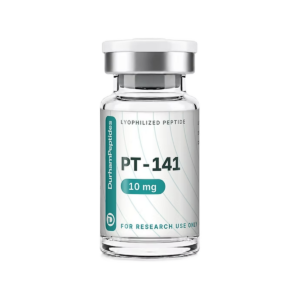
While phosphodiesterase type 5 (PDE5) inhibitors such as sildenafil and tadalafil effectively address erectile dysfunction by enhancing peripheral vascular blood flow to genital tissues, they have no direct effect on subjective sexual desire, libido, or central arousal. For individuals suffering from deficient sexual desire, peripheral vasodilators are biologically ineffective.
Bremelanotide (widely known in the research community as PT-141) represents a completely distinct pharmacological class: it is a synthetic cyclic heptapeptide that acts directly on the central nervous system to stimulate sexual desire and subjective arousal.
Approved by the US Food and Drug Administration (FDA) in 2019 under the brand name Vyleesi, bremelanotide is officially licensed for the treatment of generalized hypoactive sexual desire disorder (HSDD) in premenopausal women. At the same time, PT-141 has been extensively investigated for male erectile dysfunction refractory to PDE5 inhibitors and is widely circulated as an unapproved research peptide.
This article reviews the neurobiology of melanocortin receptor activation, clinical trial evidence from the pivotal Phase 3 RECONNECT program, cardiovascular side effects (transient blood pressure spikes), and the regulatory divide between pharmaceutical-grade Vyleesi and illicit grey-market research peptides.
Origins: From Tanning Peptide (Melanotan II) to Sexual Medicine
The discovery of bremelanotide was serendipitous:
- In the 1990s, researchers at the University of Arizona developed synthetic analogues of alpha-melanocyte-stimulating hormone (α-MSH), notably Melanotan II, intended to stimulate epidermal eumelanin production to protect against sun-induced skin cancers.
- During early human volunteer trials, male participants unexpectedly reported spontaneous, sustained penile erections and heightened sexual arousal accompanied by mild nausea.
- Scientists recognized that Melanotan II activated multiple central melanocortin receptors. Researchers subsequently synthesized a downstream metabolite: a cyclic heptapeptide lacking the lipophilic core of Melanotan II, designated PT-141 (bremelanotide).
- Bremelanotide exhibited potent central sexual arousal effects with reduced (though not eliminated) systemic melanogenic tanning properties.
Neurobiology: Central Melanocortin Receptor Activation
Sexual response requires an intricate balance between central excitatory neurochemical systems (dopamine, melanocortins, oxytocin, noradrenaline) and inhibitory systems (serotonin, endocannabinoids, opioids):
                   Bremelanotide Subcutaneous Injection
                                    │
                                    ▼
                     Crosses Blood-Brain Barrier
                                    │
                                    ▼
                Hypothalamic Melanocortin Receptors (MC4R)
             (Medial Preoptic Area & Paraventricular Nucleus)
                                    │
       ┌────────────────────────────┴────────────────────────────┐
       ▼                                                         ▼
Dopamine Efflux                                          Autonomic Outflow
(Mesolimbic Reward Network)                              (Sacral Parasympathetic)
• Enhances sexual motivation                             • Stimulates genital blood flow
• Amplifies response to sexual cues                      • Clitoral / penile tumescence
• Restores subjective desire                             • Central arousal feedback
The Role of MC4R in Sexual Motivation
Bremelanotide is a non-selective agonist of melanocortin receptors, binding to MC1R, MC3R, MC4R, and MC5R (with minimal affinity for MC2R, the ACTH receptor).
- Its pro-sexual effects are mediated primarily via the melanocortin-4 receptor (MC4R) expressed in the medial preoptic area (mPOA), paraventricular nucleus (PVN), and ventromedial nucleus of the hypothalamus.
- Activation of MC4R stimulates downstream release of dopamine in the medial preoptic area, a neurochemical pathway essential for sexual wanting, attention to sexual stimuli, and motivational salience.
- In animal and neuroimaging models, bremelanotide restores normal dopamine signaling in response to erotic cues without inducing continuous, unprompted obsessive arousal.
Phase 3 Clinical Trial Evidence: The RECONNECT Studies
The FDA approval of bremelanotide was based on two identical, pivotal Phase 3 randomized, double-blind, placebo-controlled trials: RECONNECT 301 and RECONNECT 302, published in the Journal of Sexual Medicine in 2019.
The trials enrolled 1,247 premenopausal women with acquired, generalized HSDD of at least 6 months’ duration:
- Participants were randomized to self-administer subcutaneous bremelanotide (1.75 mg) or placebo on-demand via an autoinjector, roughly 45 minutes prior to anticipated sexual activity, over a 24-week double-blind period.
| Co-Primary Endpoints | Bremelanotide 1.75 mg (N=600) | Placebo (N=602) | Statistical Significance |
|---|---|---|---|
| Increase in FSFI Desire Domain Score | +0.60 | +0.21 | p < 0.0001 |
| Reduction in FSDS-DAO Distress Score | -0.70 | -0.40 | p < 0.0001 |
| Satisfying Sexual Events (SSEs) Change | +0.6 per month | +0.4 per month | p = 0.07 (Not statistically significant) |
Clinical Interpretation:
- Desire and Distress: Bremelanotide met both pre-specified co-primary endpoints, producing statistically significant increases in sexual desire (measured by the Female Sexual Function Index, FSFI) and significant reductions in personal distress associated with low desire (measured by the Female Sexual Distress Scale-Desire/Arousal/Orgasm, FSDS-DAO).
- The SSE Nuance: While subjective desire and distress improved significantly, the absolute increase in satisfying sexual events did not reach statistical significance over placebo. The FDA accepted the primary endpoints because HSDD is diagnostically defined by deficient desire and personal distress, rather than event frequency.
Bremelanotide in Male Erectile Dysfunction
Before being licensed for female HSDD, bremelanotide was investigated in clinical trials for male erectile dysfunction:
- Efficacy in ED: Early Phase 2 trials demonstrated that subcutaneous bremelanotide (1.0 to 2.0 mg) induced rigid erections in approximately 65% to 70% of men with psychogenic or mild-to-moderate organic ED.
- Synergy with PDE5 Inhibitors: In men who responded poorly to sildenafil alone, combining sub-therapeutic doses of bremelanotide with sildenafil produced synergistic erectile rigidity. While sildenafil increases pelvic blood inflow, bremelanotide enhances central autonomic outflow from the brain.
- Why Development Was Halted for ED: In early trials utilizing an intranasal spray formulation, bremelanotide caused unpredictable, clinically significant spikes in blood pressure in male patients. The pharmaceutical sponsor abandoned the intranasal male ED program to concentrate on low-dose subcutaneous delivery for female HSDD.
Dosing and Administration Protocols
For the licensed formulation (Vyleesi):
- Approved Dose: 1.75 mg administered subcutaneously.
- Timing: Injected into the abdomen or front of the thigh at least 45 minutes prior to anticipated sexual activity.
- Maximum Frequency: No more than one dose within any 24-hour period, and no more than 8 doses per calendar month.
- Discontinuation Rule: If a patient experiences no improvement in sexual desire or distress after 8 weeks of treatment, therapy should be discontinued.
Adverse Reactions and Blood Pressure Monitoring
Because bremelanotide activates multiple melanocortin receptors, it exhibits distinct adverse effects:
1. Nausea (The Primary Adverse Event)
- In the RECONNECT trials, 40.0% of women experienced nausea with bremelanotide (compared to 1.3% with placebo).
- Nausea typically begins within 1 to 2 hours post-injection, lasts for several hours, and required anti-emetic therapy or led to treatment discontinuation in approximately 8% of trial participants.
- Clinical Pearl: Taking the injection with a small meal or co-administering an oral anti-emetic (e.g. ondansetron 4 mg) can blunt the emetic response.
2. Blood Pressure and Sympathetic Stimulation
MC4R receptors in the paraventricular nucleus and spinal sympathetic preganglionic neurons regulate cardiovascular tone:
- Bremelanotide induces a transient increase in systolic blood pressure (averaging 2 to 4 mmHg) and diastolic blood pressure, typically peaking 2 to 4 hours post-injection and resolving within 12 hours.
- Heart rate decreases transiently by 3 to 5 beats per minute (reflex bradycardia).
- Contraindications: Bremelanotide is strictly contraindicated in patients with uncontrolled hypertension (systolic BP ≥140 mmHg or diastolic BP ≥90 mmHg) or established cardiovascular disease.
3. Focal Hyperpigmentation (MC1R Cross-Reactivity)
Because bremelanotide cross-reacts with the melanocortin-1 receptor (MC1R) on cutaneous melanocytes:
- Approximately 1% of patients developed hyperpigmentation of the face, gums, or breast tissue, particularly those who administered more than 8 doses per month or patients with darker Fitzpatrick skin phototypes. In some clinical trial participants, hyperpigmentation did not fully resolve after drug cessation.
Regulatory Status: FDA Approval vs UK / European Position
The international regulatory standing of bremelanotide is divided:
- United States (FDA): Fully approved in June 2019 as Vyleesi (bremelanotide injection, 1.75 mg/0.3 mL) as a prescription-only medicine.
- United Kingdom (MHRA): Bremelanotide is not approved or licensed by the MHRA for commercial marketing. It cannot be prescribed on the National Health Service (NHS) or dispensed as a licensed British medicine.
- European Union (EMA): Bremelanotide has not received marketing authorisation from the European Medicines Agency.
- Controlled Substance Status: Bremelanotide is not a scheduled narcotic under the US Controlled Substances Act or the UK Misuse of Drugs Act.
The Research Chemical (Grey Market) Problem
Due to commercial licensing restrictions in Europe and the high cost of Vyleesi in the US, an active online grey market distributes lyophilised “PT-141” labelled for “Research Use Only”:
- High Contamination Risk: Independent laboratory testing of grey-market PT-141 vials consistently reveals batch-to-batch variability, presence of truncated peptide fragments, chemical impurities, and variable sterility (endotoxin contamination).
- Severe Dosing Errors: Research chemical vials typically contain 10 mg of unmeasured powder. Attempting to reconstitute and dose with insulin syringes frequently leads to accidental overdosing (e.g. 3 mg to 5 mg), precipitating severe intractable vomiting, acute hypertensive spikes, and prolonged priapism in men.
- NovaMeds Policy: Unlicensed research peptide vials are strictly classified as Information Only. They are not offered for purchase or clinical consumption.
Frequently Asked Questions
Can PT-141 be taken as a nasal spray or oral tablet?
While early clinical trials experimented with intranasal bremelanotide, the nasal route was abandoned by pharmaceutical developers due to unpredictable absorption rates and acute blood pressure spikes. The only approved, standardized formulation is subcutaneous injection. Oral bioavailability is negligible due to gastric protease cleavage.
Does bremelanotide work for men?
Yes. Clinical trials confirmed that bremelanotide stimulates central erectile pathways in men and increases subjective sexual desire. However, it is not officially approved for male use by the FDA or MHRA; its use in men remains off-label.
How does bremelanotide compare to flibanserin (Addyi)?
Flibanserin (Addyi) is the only other FDA-approved medication for female HSDD. While flibanserin is an oral 5-HT1A agonist taken daily at bedtime that interacts dangerously with alcohol, bremelanotide is an on-demand subcutaneous injection taken 45 minutes before sex and carries no absolute alcohol contraindication.
Related reading: Sildenafil vs Tadalafil: Duration, Food Interactions and Clinical Choice · What Are Peptides? A Guide to Peptide Medicines and Research · Testosterone Undecanoate: Oral (Jatenzo) vs Long-Acting Injections (Nebido/Aveed)
Scientific references
- Kingsberg SA, et al. Bremelanotide for the Treatment of Hypoactive Sexual Desire Disorder: Two Randomized, Phase 3 Trials (RECONNECT Studies). Obstetrics & Gynecology. 2019;134(5):899-908. PubMed PMID: 31599839
- Clayton AH, et al. Evaluation of Safety and Tolerability of Bremelanotide in Premenopausal Women with Hypoactive Sexual Desire Disorder: Integrated Analysis of Two Phase 3 Randomized Trials. Journal of Sexual Medicine. 2020;17(4):676-688. PubMed PMID: 32067936
- Diamond LE, et al. Co-administration of low doses of intranasal PT-141, a melanocortin receptor agonist, and sildenafil to produce an erectile response in patients with erectile dysfunction: Results of a randomized, placebo-controlled study. European Urology. 2005;48(6):1038-1045. PubMed PMID: 16171926
- US Food and Drug Administration (FDA). FDA approves new treatment for hypoactive sexual desire disorder in premenopausal women (Vyleesi). FDA News Release; June 21, 2019.
- Palatin Technologies. Vyleesi (bremelanotide injection) Prescribing Information. US FDA Drug Approvals; Revised 2023.
This article is educational and does not constitute personalised treatment advice. Treatment decisions depend on individual circumstances and professional assessment.