Semaglutide and tirzepatide are two important developments in the treatment of obesity and type 2 diabetes. Both act on biological pathways involved in glucose regulation and appetite, but they differ in their molecular targets, available formulations and clinical evidence.
Semaglutide activates the glucagon-like peptide-1 (GLP-1) receptor, whereas tirzepatide activates both GLP-1 and glucose-dependent insulinotropic polypeptide (GIP) receptors.
Their differences are no longer understood solely through separate clinical trials. The SURMOUNT-5 study, published in 2025, directly compared the two medicines in adults with obesity or overweight without type 2 diabetes, providing important evidence about their relative effects on body weight.
This article examines their mechanisms, clinical outcomes, formulations and safety profiles, distinguishing established evidence from areas of continuing research.
The Role of Incretin Hormones
Incretins are hormones released by the gastrointestinal tract in response to food intake. They help coordinate insulin secretion, blood glucose regulation and other metabolic processes.
Two particularly important incretin hormones are GLP-1 and GIP.
GLP-1 stimulates glucose-dependent insulin secretion, reduces glucagon secretion when glucose is elevated, delays gastric emptying and participates in signalling pathways associated with appetite and satiety.
GIP also stimulates glucose-dependent insulin secretion. Its physiological and pharmacological effects extend beyond pancreatic function, although the mechanisms underlying the benefits of combining GIP and GLP-1 receptor activation remain an active area of research.
Natural incretin hormones have short biological half-lives because enzymes, including dipeptidyl peptidase-4 (DPP-4), rapidly degrade them. Pharmaceutical modifications allow incretin-based medicines to remain active for substantially longer.
Semaglutide and tirzepatide exploit these biological pathways through different receptor-targeting strategies.[3,4]
How Semaglutide Works
Semaglutide is a selective GLP-1 receptor agonist.
It is a modified peptide designed to resist enzymatic degradation and remain active for an extended period. Its molecular structure allows prolonged binding to albumin, contributing to a half-life of approximately one week following subcutaneous administration.
By activating GLP-1 receptors, semaglutide supports glucose-dependent insulin secretion, reduces inappropriate glucagon release and influences appetite-regulating pathways.
These effects contribute to improved glycemic control and reduced energy intake. Semaglutide’s effects on gastric emptying may also contribute to its clinical profile, although this effect can change with continued treatment.
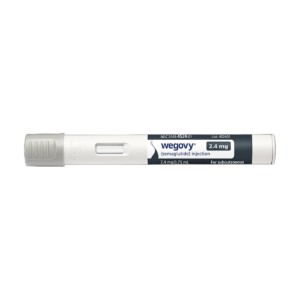
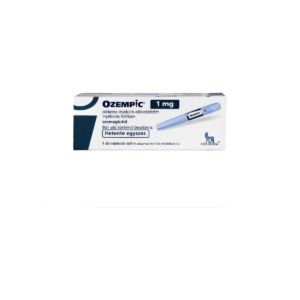
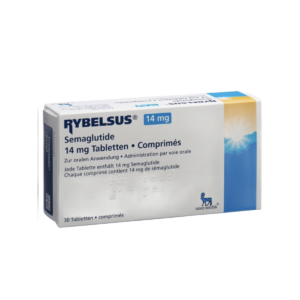
Semaglutide is the active ingredient in several medicines, including Ozempic, Wegovy and Rybelsus. These products should not be treated as interchangeable: their formulations, doses and authorized indications differ.[3,6]
How Tirzepatide Works
Tirzepatide is a synthetic peptide that activates both GIP and GLP-1 receptors.
Unlike semaglutide, it combines activity at two incretin receptors within a single molecule. Its structure incorporates modifications that prolong systemic exposure, producing a half-life of approximately five days and supporting once-weekly subcutaneous administration.
This dual receptor activity is associated with substantial improvements in glycemic control and body weight in clinical trials.
However, it would be an oversimplification to attribute every observed benefit exclusively to GIP receptor activation. The mechanisms behind tirzepatide’s clinical effects, including the relative contribution of each receptor pathway, continue to be investigated.
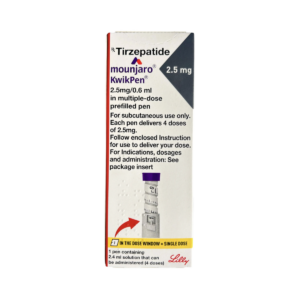
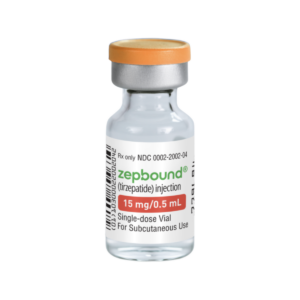
Tirzepatide is marketed under different brand names and indications across regions, including Mounjaro and Zepbound.[4,7]
Formulations and Administration
Both semaglutide and tirzepatide are available as subcutaneous injections. Depending on the brand and market, the presentation may involve single-dose or multidose injection devices.
Semaglutide is also available in oral formulations.
Developing oral peptide medicines is challenging because peptides generally have poor gastrointestinal absorption. Oral semaglutide uses an absorption enhancer known as SNAC to facilitate absorption through the stomach.
Two oral semaglutide product families must be distinguished.
Rybelsus: Oral Semaglutide for Type 2 Diabetes
Rybelsus is indicated for type 2 diabetes, according to its regional product authorization.
The original tablet formulation used strengths of 3 mg, 7 mg and 14 mg.
A newer formulation with improved bioavailability uses 1.5 mg, 4 mg and 9 mg. The corresponding formulations provide comparable exposure at their respective equivalent strengths:
| Original formulation | New formulation |
|---|---|
| 3 mg | 1.5 mg |
| 7 mg | 4 mg |
| 14 mg | 9 mg |
These formulations are not interchangeable on a simple milligram-for-milligram basis. The applicable product information should be consulted to identify the precise formulation.[8]
Oral Wegovy: Semaglutide for Weight Management
Oral Wegovy is a separate semaglutide product developed for weight management.
The US FDA approved the once-daily 25 mg oral formulation in December 2025. The UK’s MHRA subsequently authorized oral Wegovy on 11 June 2026.
The UK formulation includes strengths of 1.5 mg, 4 mg, 9 mg and 25 mg, with 25 mg representing the maintenance strength described in the relevant product information.
Approval does not necessarily mean immediate availability through every pharmacy or public healthcare system. The MHRA stated at approval that NHS availability would be subject to subsequent assessment and commissioning decisions.[9,10]
Tirzepatide does not currently have an authorized oral formulation.
Clinical Evidence for Weight Management
Earlier Evidence: STEP and SURMOUNT
Before direct comparative results became available, semaglutide and tirzepatide were frequently compared through separate clinical development programmes.
The STEP 1 trial evaluated semaglutide 2.4 mg in adults with overweight or obesity without diabetes. At 68 weeks, mean body weight reduction was 14.9% with semaglutide versus 2.4% with placebo.
SURMOUNT-1 evaluated several doses of tirzepatide in a different study population. At 72 weeks, mean weight reductions were 15.0%, 19.5% and 20.9% with tirzepatide 5 mg, 10 mg and 15 mg, respectively, compared with 3.1% with placebo.
Although these results provided important evidence for each medicine, comparing figures across separate trials is inherently limited by differences in participants, study design, duration and analysis methods.[11,12]
SURMOUNT-5: Direct Head-to-Head Evidence
The SURMOUNT-5 trial addressed this limitation by directly comparing the two treatments.
Published online in May 2025 in the New England Journal of Medicine, this phase 3b, randomized, open-label trial enrolled 751 adults with obesity or overweight and at least one weight-related complication, without type 2 diabetes.
Participants were assigned to receive once-weekly subcutaneous tirzepatide or semaglutide for 72 weeks.
The study used maximum tolerated doses:
- Tirzepatide: 10 mg or 15 mg.
- Semaglutide: 1.7 mg or 2.4 mg.
The primary endpoint was percentage change in body weight from baseline to week 72.
Primary result: Mean weight reduction was 20.2% in the tirzepatide group and 13.7% in the semaglutide group — a difference of 6.5 percentage points.
Tirzepatide also demonstrated greater reductions in waist circumference and higher rates of achieving several clinically meaningful weight-loss thresholds.
Gastrointestinal events were the most common adverse events in both treatment groups. Most were mild to moderate and occurred during dose escalation.
How Should SURMOUNT-5 Be Interpreted?
SURMOUNT-5 provides direct evidence that tirzepatide produced greater average weight reduction than semaglutide under the specific conditions studied.
However, several considerations are important.
First, the study involved adults without type 2 diabetes. Its results should not automatically be generalized to every patient population.
Second, it was open-label: participants and investigators knew which medicine was being administered. This introduces potential bias, although body weight is an objectively measurable outcome.
Third, the comparison involved particular injectable doses and treatment conditions. It does not establish an equivalent comparison between every marketed formulation or between oral semaglutide and tirzepatide.
Finally, the trial was funded by Eli Lilly, the manufacturer of tirzepatide. Sponsorship is relevant context when interpreting the evidence but does not, by itself, invalidate the findings.
The study establishes an important comparative efficacy result without determining which medicine is appropriate for every individual.[1]
Clinical Evidence for Type 2 Diabetes
The SURPASS-2 study provides direct comparative evidence for glycemic control.
This phase 3, open-label trial enrolled 1,879 adults with type 2 diabetes inadequately controlled with metformin.
Participants received tirzepatide at 5 mg, 10 mg or 15 mg, or semaglutide at 1 mg, once weekly for 40 weeks.
Mean reductions in glycated hemoglobin (HbA1c) were:
| Treatment | Mean HbA1c reduction |
|---|---|
| Tirzepatide 5 mg | 2.01 percentage points |
| Tirzepatide 10 mg | 2.24 percentage points |
| Tirzepatide 15 mg | 2.30 percentage points |
| Semaglutide 1 mg | 1.86 percentage points |
All three tirzepatide doses demonstrated superiority over semaglutide 1 mg for the study’s primary glycemic outcome.
Importantly, SURPASS-2 compared tirzepatide against semaglutide 1 mg, not every currently available semaglutide strength. Its findings should be interpreted within that dose-specific comparison.
SURPASS-2 and SURMOUNT-5 address different clinical questions: the former principally evaluated glycemic control in people with type 2 diabetes, while the latter directly compared weight reduction in people without diabetes.[2]
Brand Names and Approved Indications
The same active ingredient can be marketed under different brand names, depending on its formulation, authorized indication and country.
| Active ingredient | Brand | Principal product category |
|---|---|---|
| Semaglutide | Ozempic | Injectable treatment for type 2 diabetes |
| Semaglutide | Wegovy | Weight-management treatment |
| Semaglutide | Rybelsus | Oral treatment for type 2 diabetes |
| Tirzepatide | Mounjaro | Type 2 diabetes; also weight management in authorized markets |
| Tirzepatide | Zepbound | US brand for authorized tirzepatide indications, including weight management |
For example, Mounjaro carries authorizations for both type 2 diabetes and weight management in the United Kingdom, whereas the United States uses distinct Mounjaro and Zepbound brand authorizations.
Oral Wegovy was approved in the United States in December 2025 and in the United Kingdom in June 2026.
Authorized indications, product strengths and availability should always be checked against the relevant country’s current product information.
Safety and Contraindications
Semaglutide and tirzepatide share several important adverse effects, particularly gastrointestinal symptoms.
Common Adverse Effects
The most frequently reported effects include nausea, vomiting, diarrhea, constipation and abdominal discomfort.
These effects frequently occur during treatment initiation or dose escalation. Their severity, frequency and persistence vary between individuals.
Important Risks and Precautions
Pancreatitis: Acute pancreatitis has been reported with incretin-based treatments. Severe, persistent abdominal pain requires prompt medical assessment. If pancreatitis is suspected, the medicine should be discontinued pending appropriate clinical evaluation.
Gallbladder disorders: Gallstones and gallbladder inflammation may occur. Substantial weight loss itself can also contribute to gallstone risk.
Dehydration and renal complications: Persistent vomiting or diarrhea can lead to dehydration, potentially worsening renal function.
Hypoglycemia: The risk can increase when either medicine is combined with insulin or insulin secretagogues such as sulfonylureas.
Pregnancy: These medicines are not appropriate for use during pregnancy. Product-specific recommendations concerning pregnancy planning and discontinuation intervals should be followed.
Anesthesia and sedation: Delayed gastric emptying has prompted regulatory warnings about possible aspiration during general anesthesia or deep sedation. Patients should inform their anesthetic team about relevant medicines.
Other precautions, including those associated with diabetic retinopathy and severe gastrointestinal disease, depend on the product and individual clinical circumstances.[6,7]
Thyroid Tumour Warnings: US and UK Differences
US prescribing information for relevant semaglutide and tirzepatide products includes a boxed warning concerning thyroid C-cell tumours observed in rodents. It also identifies personal or family history of medullary thyroid carcinoma (MTC), or Multiple Endocrine Neoplasia syndrome type 2 (MEN2), as contraindications.
The relevance of rodent thyroid C-cell findings to humans remains uncertain.
UK product information is not identical. For example, the UK SmPCs for Wegovy and Mounjaro list hypersensitivity to the active ingredient or relevant excipients under Section 4.3, rather than reproducing the US MTC/MEN2 contraindication wording.
Therefore, FDA contraindications should not be presented as though they are automatically identical to UK-authorized labelling.
Both patients and healthcare professionals should consult the specific, current product information applicable to their country.[5,6,7]
Comparison Table
| Feature | Semaglutide | Tirzepatide |
|---|---|---|
| Receptor activity | GLP-1 | GIP and GLP-1 |
| Approximate half-life | One week | Five days |
| Injectable formulation | Yes | Yes |
| Oral formulation | Yes | No authorized oral formulation |
| Representative brands | Ozempic, Wegovy, Rybelsus | Mounjaro, Zepbound |
| SURMOUNT-5 mean weight reduction | 13.7% | 20.2% |
| SURPASS-2 comparator | 1 mg weekly | 5, 10 or 15 mg weekly |
| Important adverse effects | Primarily gastrointestinal; additional product-specific warnings | Primarily gastrointestinal; additional product-specific warnings |
The weight-loss figures refer specifically to SURMOUNT-5 and should not be interpreted as guaranteed individual outcomes.
Frequently Asked Questions
Are semaglutide and tirzepatide forms of insulin?
No. They are incretin-based medicines that act through hormonal pathways involved in glucose regulation. Neither is a form of insulin.
Is tirzepatide more effective than semaglutide for weight loss?
SURMOUNT-5 found greater mean weight reduction with tirzepatide than with injectable semaglutide at the doses studied. This is a finding about average outcomes in a defined clinical trial population, not a prediction of how any particular individual will respond.
Can semaglutide be taken as a tablet?
Yes. Rybelsus is an oral semaglutide medicine for type 2 diabetes. Oral Wegovy is a separate formulation authorized for weight management in the United States and United Kingdom.
The products have different strengths and should not be regarded as interchangeable.
Is there an oral version of tirzepatide?
No authorized oral formulation of tirzepatide was identified as of the article’s review date. Authorized tirzepatide products are administered by subcutaneous injection.
Can someone switch directly between these medicines?
A transition between treatments should be assessed by a qualified prescriber. The products differ in formulation, receptor activity and prescribing requirements; there is no universal milligram-equivalent conversion.
Do these treatments cause muscle loss?
Weight reduction may involve changes in both fat mass and lean mass. Body-composition outcomes depend on factors including nutritional intake, physical activity, the magnitude of weight loss and individual health circumstances.
The SURMOUNT-5 percentage weight-loss results do not, by themselves, establish a direct comparison of muscle loss between the two medicines.
Does a medicine’s approval mean it is available through the NHS?
No. Regulatory authorization and NHS availability are separate matters. Medicines may require health-technology assessment, funding decisions and implementation before routine NHS access becomes available.
Conclusion
Semaglutide and tirzepatide represent two established approaches to incretin-based treatment, with meaningful differences in receptor activity, available formulations and clinical outcomes.
SURMOUNT-5 demonstrated greater average weight reduction with tirzepatide than with injectable semaglutide in adults with obesity or overweight without type 2 diabetes. SURPASS-2 separately demonstrated greater HbA1c reductions with the studied tirzepatide doses than with semaglutide 1 mg in adults with type 2 diabetes.
Meanwhile, oral semaglutide has expanded the available formulation options, particularly following the approval of oral Wegovy for weight management in the United States and United Kingdom.
These findings inform clinical understanding but do not determine the appropriate treatment for any particular patient. Relevant considerations include approved indications, individual medical history, contraindications, tolerability, administration preferences and professional assessment.
Related reading: Ozempic vs Wegovy: What’s the Difference? · Mounjaro vs Zepbound: Same Tirzepatide, Different Indications · Oral vs Injectable Semaglutide: Rybelsus and Wegovy Explained · GLP-1 vs GIP: How Semaglutide and Tirzepatide Work · What Happens When Stopping GLP-1 Medicines? Evidence on Weight Regain · Managing GLP-1 Side Effects: Nausea, Constipation and GI Tolerability · GLP-1 Medications and Muscle Mass: Preserving Lean Tissue During Weight Loss
Scientific References
- Aronne LJ, Horn DB, le Roux CW, et al. Tirzepatide as Compared with Semaglutide for the Treatment of Obesity. New England Journal of Medicine. 2025;393:26–36. https://doi.org/10.1056/NEJMoa2416394
- Frías JP, Davies MJ, Rosenstock J, et al. Tirzepatide versus Semaglutide Once Weekly in Patients with Type 2 Diabetes. New England Journal of Medicine. 2021;385:503–515. https://doi.org/10.1056/NEJMoa2107519
- Müller TD, Finan B, Bloom SR, et al. Glucagon-like peptide 1 (GLP-1). Molecular Metabolism. 2019;30:72–130. https://doi.org/10.1016/j.molmet.2019.09.010
- Coskun T, Sloop KW, Loghin C, et al. LY3298176, a novel dual GIP and GLP-1 receptor agonist for the treatment of type 2 diabetes mellitus. Molecular Metabolism. 2018;18:3–14. https://doi.org/10.1016/j.molmet.2018.09.009
- US FDA. Zepbound: Prescribing Information. Official product and regulatory information. FDA Drugs@FDA
- Novo Nordisk. Wegovy: UK Summary of Product Characteristics. https://www.medicines.org.uk/emc/product/13801/smpc
- Eli Lilly. Mounjaro KwikPen: UK Summary of Product Characteristics. https://www.medicines.org.uk/emc/product/15482/smpc
- Novo Nordisk. Rybelsus: UK Summary of Product Characteristics, including the newer oral formulation. https://www.medicines.org.uk/emc/product/101229/smpc
- Medicines and Healthcare products Regulatory Agency. First GLP-1 tablet for weight loss approved in the UK. 11 June 2026. Official MHRA announcement
- Novo Nordisk. Wegovy pill approved in the US as first oral GLP-1 for weight management. 22 December 2025. Official company announcement
- Wilding JPH, Batterham RL, Calanna S, et al. Once-Weekly Semaglutide in Adults with Overweight or Obesity. New England Journal of Medicine. 2021;384:989–1002. https://doi.org/10.1056/NEJMoa2032183
- Jastreboff AM, Aronne LJ, Ahmad NN, et al. Tirzepatide Once Weekly for the Treatment of Obesity. New England Journal of Medicine. 2022;387:205–216. https://doi.org/10.1056/NEJMoa2206038
This article is educational and is not a substitute for individual medical assessment.