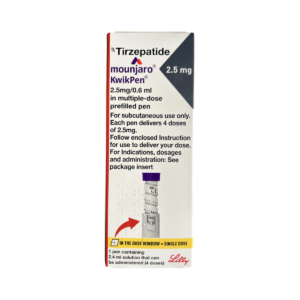
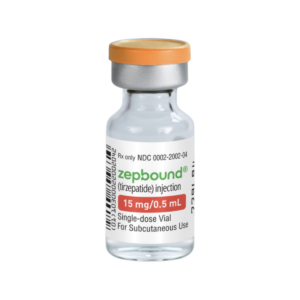
Mounjaro and Zepbound contain the same active ingredient, tirzepatide, made by the same company, Eli Lilly. They are not different drugs in any pharmacological sense. What differs is the authorisation: which conditions each product is licensed to treat, and in which countries.
In the United States, Mounjaro is the diabetes brand and Zepbound the brand for weight management and obstructive sleep apnoea. As of September 2026, we found no UK marketing authorisation for Zepbound. In the UK, Mounjaro itself covers both type 2 diabetes and weight management.
At a glance
| Mounjaro | Zepbound | |
|---|---|---|
| Active ingredient | Tirzepatide | Tirzepatide |
| Drug class | Dual GIP and GLP-1 receptor agonist | Dual GIP and GLP-1 receptor agonist |
| Administration | Injection under the skin | Injection under the skin |
| Dosing frequency | Once weekly | Once weekly |
| Maintenance doses | Adults: recommended maintenance doses 5 mg, 10 mg or 15 mg. Ages 10–17 with type 2 diabetes: 5 mg or 10 mg | 5 mg, 10 mg or 15 mg (10 mg or 15 mg for sleep apnoea) |
| Tablet authorised? | No | No |
| US position | Type 2 diabetes (adults and children aged 10 and over); cardiovascular risk reduction in adults with type 2 diabetes at high risk | Weight management in adults; moderate to severe obstructive sleep apnoea in adults with obesity |
| UK position | Type 2 diabetes (adults, adolescents and children aged 10 and over); weight management in adults | Not authorised |
Sources: US prescribing information for Mounjaro and Zepbound (both revised August 2026); UK Summary of Product Characteristics for Mounjaro KwikPen (revised 29 August 2026).
One molecule, two brands
Tirzepatide is a single synthetic peptide that activates two hormone receptors: the receptor for glucose-dependent insulinotropic polypeptide (GIP) and the receptor for glucagon-like peptide-1 (GLP-1). Both are gut hormones involved in insulin release and appetite. Activating them lowers blood glucose, slows stomach emptying and reduces food intake. A fatty-acid chain lets a single dose last about a week.
How much the GIP component adds to the effect of GLP-1 activation is still being studied. The mechanism is covered in GLP-1 vs GIP, and the comparison with semaglutide in Semaglutide vs Tirzepatide.
The active ingredient and available strengths overlap across the two brands, but the authorised doses, presentations and uses depend on the brand, indication and market.
Why the same medicine has two names
A marketing authorisation is granted for specific uses, in specific people, on the basis of specific trials. Tirzepatide was developed in two largely separate programmes:
- SURPASS, in type 2 diabetes;
- SURMOUNT, in people with obesity or overweight, most of them without diabetes.
In the US, Lilly sought approval for weight management under a new brand, Zepbound, rather than adding it to the Mounjaro label. Keeping the two brands apart keeps the prescribing information for each use separate, a pattern also seen with semaglutide in Ozempic and Wegovy. See Ozempic vs Wegovy.
The UK took a different route. The MHRA authorised Mounjaro for weight management on 8 November 2023, as an extension of the existing Mounjaro licence, so no second brand was needed. As of September 2026, we found no UK marketing authorisation for Zepbound in the MHRA product database or the electronic medicines compendium. A Zepbound-branded product would therefore not be a UK-authorised presentation of tirzepatide.
Mounjaro: what it is authorised for
United States. The FDA first approved Mounjaro in May 2022 to improve blood glucose control in adults with type 2 diabetes. Since then:
- December 2025: the indication was extended to children aged 10 and over with type 2 diabetes.
- 27 August 2026: a second indication was added, reducing the risk of major adverse cardiovascular events (cardiovascular death, non-fatal heart attack or non-fatal stroke) in adults with type 2 diabetes at high risk of these events.
The cardiovascular indication rests on SURPASS-CVOT, and how that trial was designed matters for interpreting it.
- Comparator. The trial did not compare tirzepatide with placebo. It compared it with dulaglutide, a GLP-1 receptor agonist that already carries its own cardiovascular indication.
- Participants. 13,299 adults with type 2 diabetes and established cardiovascular disease, followed for a median of about four years (210 weeks).
- Result. Tirzepatide met the prespecified test of non-inferiority: the hazard ratio for major adverse cardiovascular events was 0.92 (95.3% CI 0.83–1.01). Superiority over dulaglutide was not established (US prescribing information).
Tirzepatide met the prespecified criterion for non-inferiority versus dulaglutide. Superiority was not established. A non-inferiority test asks whether a new treatment’s effect falls within a predefined margin of an established comparator; it is not designed to show that one is better than the other.
United Kingdom. The UK authorisation for Mounjaro covers two indications:
- type 2 diabetes in adults, adolescents and children aged 10 and over;
- weight management in adults, alongside a reduced-calorie diet and increased physical activity, with a BMI of 30 kg/m² or more, or 27 to under 30 with at least one weight-related condition.
The UK product information describes trial results for cardiovascular events, obstructive sleep apnoea and heart failure with preserved ejection fraction in its section on pharmacological properties. These are presented as trial findings, not as authorised indications.
Doses. Treatment starts at 2.5 mg once a week. After at least four weeks the dose rises in 2.5 mg increments. Recommended maintenance doses in adults are 5 mg, 10 mg or 15 mg; for children and adolescents aged 10–17 with type 2 diabetes, 5 mg or 10 mg.
Zepbound: what it is authorised for (US only)
Zepbound was approved by the FDA on 8 November 2023 for weight management. The current label covers:
- adults with obesity, or with overweight and at least one weight-related condition, alongside a reduced-calorie diet and increased physical activity;
- moderate to severe obstructive sleep apnoea in adults with obesity, added on 20 December 2024.
Weight management. The main evidence is SURMOUNT-1, a 72-week trial in 2,539 adults without diabetes. In the intention-to-treat analysis reported in the US prescribing information, average weight change was:
- −15.0% with 5 mg;
- −19.5% with 10 mg;
- −20.9% with 15 mg;
- −3.1% with placebo.
Obstructive sleep apnoea. The evidence comes from the SURMOUNT-OSA programme: two 52-week trials in adults with obesity and moderate to severe sleep apnoea, one without positive airway pressure therapy (PAP, for example CPAP machines) and one with it. The main measure was the apnoea-hypopnoea index (AHI), the number of breathing interruptions per hour of sleep.
- Without PAP: AHI fell by 25.3 events per hour with tirzepatide and 5.3 with placebo.
- With PAP: it fell by 29.3 and 5.5 respectively (US prescribing information).
Weight loss is thought to explain much of the improvement. The trials were not designed to show how much of the effect is independent of weight.
For sleep apnoea the maintenance dose is 10 mg or 15 mg; for weight management it is 5 mg, 10 mg or 15 mg. Zepbound is not approved in the US for type 2 diabetes as such, although adults with diabetes who meet the weight criteria fall within its weight-management indication.
Devices and presentations
In the US, both brands are now labelled in the same four presentations:
- single-dose pens;
- single-dose vials;
- multi-dose vials;
- multi-dose KwikPens, each delivering four weekly doses.
In the UK, Mounjaro is authorised as a KwikPen containing four weekly doses; the MHRA approved it in January 2024.
Authorisation of a presentation does not mean it is on sale in every market or pharmacy at any given time. The pack and leaflet supplied are the reliable reference.
Can Mounjaro be used for weight loss in the US, or Zepbound for diabetes?
In the US, weight management is authorised for Zepbound, not Mounjaro. Prescribing Mounjaro for weight loss alone would be off-label use, even though the molecule is the same. Equally, Zepbound is not approved for treating type 2 diabetes. Whether a prescriber may use a product outside its label, and whether it is reimbursed, depends on US rules and on the prescriber’s clinical judgement.
In the UK the question does not arise in the same way, because Mounjaro is authorised for both uses.
Are Mounjaro and Zepbound interchangeable?
The active ingredient and strengths are the same, but they are separate products with separate labels and authorised uses. The US labels advise against using tirzepatide together with any other tirzepatide-containing product or GLP-1 receptor agonist. Moving between them, or between tirzepatide and another medicine, is a prescribing decision.
Safety
Because they contain the same active ingredient, the two brands have a broadly similar safety profile. The most common side effects are gastrointestinal:
- nausea;
- diarrhoea;
- vomiting;
- constipation.
They are most frequent while the dose is being increased.
Important but less common risks include pancreatitis, gallbladder disease, dehydration-related kidney injury and low blood sugar when tirzepatide is combined with insulin or a sulfonylurea. Because stomach emptying is slowed, anaesthetists need to know about treatment before sedation or surgery.
Two points deserve particular attention.
Oral contraceptives. Tirzepatide can reduce the absorption of oral contraceptives, especially after the first dose and after each dose increase. The US labels advise switching to a non-oral method, or adding a barrier method, for four weeks after starting treatment and after each dose increase. The UK product information also describes this interaction.
Thyroid tumours. Tirzepatide caused thyroid C-cell tumours in rats. The US labels carry a boxed warning, the FDA’s most prominent form of warning, and contraindicate use in people with a personal or family history of medullary thyroid carcinoma or multiple endocrine neoplasia type 2. Whether this applies to humans is not known.
The patient leaflet contains the full list of side effects and precautions. Individual questions are for a doctor or pharmacist.
Frequently asked questions
Is Mounjaro the same as Zepbound?
They contain the same active ingredient, in the same strengths, from the same manufacturer. They are separate products with different authorised uses in the US.
Is Zepbound available in the UK?
As of September 2026, we found no UK marketing authorisation for Zepbound. In the UK, tirzepatide for weight management is authorised under the Mounjaro name.
Why does Mounjaro cover weight loss in the UK but not in the US?
Weight management was added to the Mounjaro licence in the UK. In the US it was approved under the separate Zepbound brand. The evidence behind both decisions is the same SURMOUNT programme.
Does Mounjaro reduce heart attacks and strokes?
In the US, Mounjaro is approved to reduce the risk of major cardiovascular events in adults with type 2 diabetes at high risk. The approval is based on SURPASS-CVOT, which showed non-inferiority to dulaglutide, another GLP-1 medicine with proven cardiovascular benefit, rather than a reduction compared with placebo. In the UK, these results are described in the product information but are not an authorised indication.
Is tirzepatide approved for sleep apnoea in the UK?
No. Sleep apnoea is an FDA-approved indication for Zepbound in the US. The UK product information for Mounjaro describes the sleep apnoea trials, but they are not a UK indication.
Is Mounjaro available on the NHS?
NICE recommends tirzepatide for some adults with type 2 diabetes (TA924) and for managing overweight and obesity (TA1026). For weight management, NHS access in England is being introduced in phases. Eligibility depends on NICE criteria and local services.
In summary
Mounjaro and Zepbound are one medicine, tirzepatide, authorised under two names in the US. There, Mounjaro covers type 2 diabetes and, since August 2026, cardiovascular risk reduction in diabetes. Zepbound covers weight management and obstructive sleep apnoea. In the UK there is only Mounjaro, authorised for type 2 diabetes and weight management. Which product and dose are appropriate is a clinical decision that depends on the individual and on the rules where they are treated.
Related reading: Semaglutide vs Tirzepatide · Ozempic vs Wegovy · Tirzepatide Dosage Guide: Titration Schedules and Administration
Sources and further reading
- US Food and Drug Administration. MOUNJARO (tirzepatide) injection — Prescribing Information, revised August 2026 (NDA 215866). Drugs@FDA. Source of the SURPASS-CVOT figures, paediatric indication and presentations.
- US Food and Drug Administration. ZEPBOUND (tirzepatide) injection — Prescribing Information, revised August 2026 (NDA 217806). Drugs@FDA. Source of the SURMOUNT-1 and SURMOUNT-OSA figures, dosing and presentations.
- US Food and Drug Administration. Drugs@FDA approval histories: NDA 215866 (Mounjaro): original approval 13 May 2022; new patient population 19 December 2025; new indication 27 August 2026.; NDA 217806 (Zepbound): original approval 8 November 2023; new indication 20 December 2024.
- Eli Lilly and Company Limited. Mounjaro KwikPen solution for injection in pre-filled pen — Summary of Product Characteristics. electronic medicines compendium (emc), date of revision 29 August 2026.
- MHRA / GOV.UK. MHRA authorises diabetes drug Mounjaro (tirzepatide) for weight management and weight loss. 8 November 2023.
- MHRA / GOV.UK. Four-dose Mounjaro “KwikPen” approved by MHRA for diabetes and weight management. 25 January 2024.
- National Institute for Health and Care Excellence. Tirzepatide for treating type 2 diabetes. Technology appraisal guidance TA924.
- National Institute for Health and Care Excellence. Tirzepatide for managing overweight and obesity. Technology appraisal guidance TA1026.
- Rosenstock J, et al. Efficacy and safety of a novel dual GIP and GLP-1 receptor agonist tirzepatide in patients with type 2 diabetes (SURPASS-1). Lancet. 2021;398(10295):143–155. doi:10.1016/S0140-6736(21)01324-6
- Frías JP, et al. Tirzepatide versus semaglutide once weekly in patients with type 2 diabetes (SURPASS-2). N Engl J Med. 2021;385(6):503–515. doi:10.1056/NEJMoa2107519
- Jastreboff AM, et al. Tirzepatide once weekly for the treatment of obesity (SURMOUNT-1). N Engl J Med. 2022;387(3):205–216. doi:10.1056/NEJMoa2206038
- Malhotra A, et al. Tirzepatide for the treatment of obstructive sleep apnea and obesity (SURMOUNT-OSA). N Engl J Med. 2024;391(13):1193–1205. doi:10.1056/NEJMoa2404881
- Nicholls SJ, et al. Cardiovascular outcomes with tirzepatide versus dulaglutide in type 2 diabetes (SURPASS-CVOT). N Engl J Med. 2025;393(24):2409–2420. doi:10.1056/NEJMoa2505928
This article is educational and does not constitute personalised treatment advice. Treatment decisions depend on individual circumstances and professional assessment.