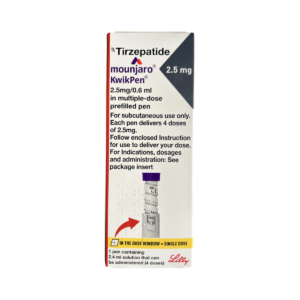
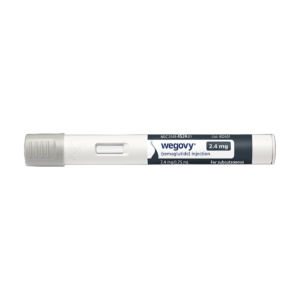
GLP-1 (glucagon-like peptide-1) and GIP (glucose-dependent insulinotropic polypeptide) are two hormones released by the gut after a meal. Both help the pancreas release insulin, but they act through different receptors and do not do the same things elsewhere in the body.
- Semaglutide activates only the GLP-1 receptor.
- Tirzepatide is a single molecule that activates both the GIP and the GLP-1 receptors, which is why it is called a dual GIP/GLP-1 receptor agonist.
What remains uncertain is how much the GIP component contributes to tirzepatide’s clinical effects. This article explains the receptor biology and separates what has been shown from what is still hypothesis. For the clinical comparison of the two medicines, see Semaglutide vs Tirzepatide.
At a glance
| GLP-1 | GIP | |
|---|---|---|
| Where it is made | L-cells, mainly in the lower small intestine and colon | K-cells, mainly in the upper small intestine |
| Effect on insulin | Increases insulin release when glucose is raised | Increases insulin release when glucose is raised |
| Effect on glucagon | Lowers it when glucose is raised | Can raise it, particularly when glucose is low |
| Stomach emptying | Slows it | Little direct effect |
| Appetite | Reduces it, acting on brain regions involved in satiety | Role in humans still being clarified |
| Insulin response in type 2 diabetes | Largely preserved | Markedly reduced |
| Medicines that activate it | Semaglutide, liraglutide, dulaglutide, orforglipron; tirzepatide (as part of dual action) | Tirzepatide (as part of dual action); no GIP-only agonist authorised |
Sources: Nauck and Meier, Diabetes Obes Metab 2018; Drucker, Cell Metab 2018; Nauck et al., J Clin Invest 1993.
The incretin effect
When glucose is swallowed, the pancreas releases considerably more insulin than when the same rise in blood glucose is produced by an intravenous infusion. This difference is called the incretin effect, and GLP-1 and GIP account for most of it.
In type 2 diabetes the incretin effect is reduced, but not equally for both hormones. In a classic 1993 study, GLP-1 infusion still produced much of its normal insulin response in people with type 2 diabetes. The maximum insulin response to GIP, by contrast, was about half that seen in people without diabetes. GLP-1 also lowered glucagon, while GIP did not (Nauck et al., J Clin Invest 1993).
That finding shaped drug development for two decades: GLP-1 became a treatment target, while GIP was widely regarded as ineffective in diabetes.
Natural GLP-1 and GIP are broken down within minutes by the enzyme DPP-4. Neither can be used as a medicine in its natural form, so drug development has relied on modified peptides that resist breakdown and last much longer.
The GLP-1 receptor
The GLP-1 receptor is found on the insulin-producing beta cells of the pancreas and in several other tissues, including:
- parts of the brain involved in appetite and nausea;
- the stomach and intestine;
- the heart and blood vessels;
- the kidney.
Activating it has several effects:
- more insulin and less glucagon when blood glucose is high;
- slower stomach emptying;
- reduced appetite and food intake (Drucker, Cell Metab 2018).
Because the insulin effect depends on glucose being raised, GLP-1 receptor agonists used alone carry a low risk of hypoglycaemia. The risk rises when they are combined with insulin or sulfonylureas.
Several GLP-1 receptor agonists have been shown in dedicated outcome trials to reduce cardiovascular events, and semaglutide has also been shown to slow kidney disease in type 2 diabetes. How much of this comes from weight loss, glucose control, blood pressure or direct effects on blood vessels and the kidney is still being studied.
The GIP receptor
GIP receptors are present on beta cells and on glucagon-producing alpha cells in the pancreas, as well as in fat tissue, bone and the brain.
In people without diabetes, GIP increases insulin release after meals. It can also increase glucagon, particularly when glucose is low, which may help protect against hypoglycaemia. Its effects on fat tissue and on appetite in humans are less well established than those of GLP-1.
For years the diabetes finding above pointed away from GIP as a drug target. Obesity research then complicated the picture. In mice, the GIP receptor looked like a target for blocking rather than activating:
- Genetics. Mice lacking the GIP receptor are protected from diet-induced weight gain.
- Blocking antibodies. Antibodies that block the receptor reduced body weight in obese mice and in non-human primates, with further weight loss when combined with a GLP-1 receptor agonist (Killion et al., Sci Transl Med 2018).
At the same time, drugs that activate the GIP receptor alongside the GLP-1 receptor, such as tirzepatide, produce substantial weight loss in humans. That both activating and blocking the same receptor could reduce weight is sometimes called the “GIP paradox”.
Several explanations have been proposed. None is established:
- prolonged stimulation may desensitise the GIP receptor, so that in practice it behaves like partial blockade;
- GIP receptor activation in the brain may reduce nausea, allowing better tolerance of GLP-1 effects;
- effects on fat tissue may alter how fat is stored.
The two approaches are being tested in people. Maridebart cafraglutide, which activates the GLP-1 receptor and blocks the GIP receptor, has completed a phase 2 trial in obesity (Jastreboff et al., N Engl J Med 2025). It is an investigational medicine and is not authorised in the UK or US.
Semaglutide: a selective GLP-1 receptor agonist
Semaglutide is a modified version of GLP-1. Three changes allow it to be used as a once-weekly medicine (Lau et al., J Med Chem 2015):
- a substitution that protects it from DPP-4;
- a fatty-acid side chain;
- a linker that binds it to albumin in the blood.
Its half-life is about a week. See What Are Peptides?
It acts only on the GLP-1 receptor. Its effects on glucose, appetite and body weight are therefore GLP-1 receptor effects, and they increase with dose within the ranges studied. Semaglutide is the active ingredient of Ozempic, Wegovy and Rybelsus, and in the US also of Ozempic tablets.
Tirzepatide: why it is called a dual agonist
Tirzepatide is a single peptide, not a combination of two drugs. Its sequence is based on GIP, modified so that it also activates the GLP-1 receptor, and a fatty-acid side chain gives it a weekly profile.
Laboratory and modelling studies suggest its actions at the two receptors are not symmetrical (Willard et al., JCI Insight 2020):
- Imbalanced. At doses used clinically, it engages the GIP receptor more than the GLP-1 receptor.
- Biased at the GLP-1 receptor. It favours one signalling pathway (cAMP) over another (β-arrestin recruitment), and triggers less receptor internalisation than natural GLP-1.
- At the GIP receptor, it behaves much like natural GIP.
These findings come from cell and tissue studies and receptor-occupancy modelling. They describe how the molecule behaves pharmacologically. They do not prove which features explain its clinical results.
Tirzepatide is the active ingredient of Mounjaro and, in the US, Zepbound.
Do the mechanisms explain the clinical differences?
In head-to-head trials, tirzepatide produced larger effects than semaglutide.
- SURPASS-2, in type 2 diabetes: after 40 weeks, glycated haemoglobin fell by 2.01 to 2.30 percentage points with tirzepatide 5–15 mg and by 1.86 with semaglutide 1 mg (Frías et al., N Engl J Med 2021).
- SURMOUNT-5, in adults with obesity without diabetes: after 72 weeks, weight fell by 20.2% with tirzepatide and 13.7% with semaglutide, each at the maximum tolerated dose (Aronne et al., N Engl J Med 2025).
It is tempting to attribute the difference to GIP, but the trials were not designed to test that. Other factors could also contribute:
- the doses of the two drugs are not pharmacologically equivalent;
- the molecules differ in how they activate the GLP-1 receptor, not only in whether they activate the GIP receptor;
- both trials were open-label.
Isolating the contribution of GIP would require different studies, and the investigational GIP-blocking approach adds to the uncertainty. The fair summary is that tirzepatide’s dual action is a plausible contributor to its clinical profile, but the mechanism has not been established. The clinical comparison itself is covered in Semaglutide vs Tirzepatide.
Beyond two receptors
The incretin field is extending in several directions.
- Triple agonists. Retatrutide adds activation of the glucagon receptor to GIP and GLP-1 receptor activation. It remains investigational. See Retatrutide Explained.
- Oral non-peptide GLP-1 agonists. Orforglipron (Foundayo) is a small molecule, not a peptide. The FDA approved it for weight management in April 2026.
- Oral peptide formulations. Semaglutide tablets use an absorption enhancer to deliver a peptide by mouth. See Oral vs Injectable Semaglutide.
Frequently asked questions
Is tirzepatide a GLP-1 medicine?
Partly. It activates the GLP-1 receptor, but also the GIP receptor, so it is described as a dual GIP/GLP-1 receptor agonist rather than a GLP-1 receptor agonist alone.
Does GIP cause weight loss?
The evidence is mixed. In mice, both activating and blocking the GIP receptor have reduced weight in different experimental settings. In humans, GIP’s specific contribution to weight loss with tirzepatide has not been isolated.
Why was GIP ignored for so long?
In type 2 diabetes the insulin response to GIP is markedly reduced, so it seemed a poor target for diabetes treatment. Interest returned when combined GIP and GLP-1 activation was tested.
Are there medicines that activate only the GIP receptor?
None is authorised in the UK or US. GIP-only agonists have been studied experimentally.
Is a dual agonist always better than a single agonist?
Not necessarily. Head-to-head trials of tirzepatide and semaglutide showed larger average effects with tirzepatide, but the choice of treatment depends on the individual, authorised indications and tolerability.
In summary
GLP-1 and GIP are both incretin hormones, but they act differently.
- GLP-1 receptor activation lowers glucose, slows stomach emptying and reduces appetite. It is the basis of semaglutide and related medicines.
- GIP’s role is more complex: its insulin effect is weakened in type 2 diabetes, and its part in body-weight regulation is still debated.
Tirzepatide combines both actions in one molecule and has outperformed semaglutide in head-to-head trials. Whether the GIP component explains that advantage has not yet been shown.
Related reading: Semaglutide vs Tirzepatide · Retatrutide Explained · Oral vs Injectable Semaglutide · Tirzepatide Dosage Guide: Titration Schedules and Administration · Orforglipron (Foundayo): Clinical Evidence, Phase 3 Trials and FDA Approval
Sources and further reading
- Nauck MA, Meier JJ. Incretin hormones: their role in health and disease. Diabetes Obes Metab. 2018;20(Suppl 1):5–21. doi:10.1111/dom.13129
- Drucker DJ. Mechanisms of action and therapeutic application of glucagon-like peptide-1. Cell Metab. 2018;27(4):740–756. doi:10.1016/j.cmet.2018.03.001
- Nauck MA, et al. Preserved incretin activity of glucagon-like peptide 1 [7-36 amide] but not of synthetic human gastric inhibitory polypeptide in patients with type-2 diabetes mellitus. J Clin Invest. 1993;91:301–307. doi:10.1172/JCI116186
- Campbell JE, et al. GIPR/GLP-1R dual agonist therapies for diabetes and weight loss — chemistry, physiology, and clinical applications. Cell Metab. 2023;35(9):1519–1529. doi:10.1016/j.cmet.2023.07.010
- Killion EA, et al. Anti-obesity effects of GIPR antagonists alone and in combination with GLP-1R agonists in preclinical models. Sci Transl Med. 2018;10(472). doi:10.1126/scitranslmed.aat3392
- Lau J, et al. Discovery of the once-weekly glucagon-like peptide-1 (GLP-1) analogue semaglutide. J Med Chem. 2015;58(18):7370–7380. doi:10.1021/acs.jmedchem.5b00726
- Coskun T, et al. LY3298176, a novel dual GIP and GLP-1 receptor agonist for the treatment of type 2 diabetes mellitus: from discovery to clinical proof of concept. Mol Metab. 2018;18:3–14. doi:10.1016/j.molmet.2018.09.009
- Willard FS, et al. Tirzepatide is an imbalanced and biased dual GIP and GLP-1 receptor agonist. JCI Insight. 2020;5(17). doi:10.1172/jci.insight.140532
- Frías JP, et al. Tirzepatide versus semaglutide once weekly in patients with type 2 diabetes (SURPASS-2). N Engl J Med. 2021;385(6):503–515. doi:10.1056/NEJMoa2107519
- Aronne LJ, et al. Tirzepatide as compared with semaglutide for the treatment of obesity (SURMOUNT-5). N Engl J Med. 2025;393(1):26–36. doi:10.1056/NEJMoa2416394
- Jastreboff AM, et al. Once-monthly maridebart cafraglutide for the treatment of obesity — a phase 2 trial. N Engl J Med. 2025;393:843–857. doi:10.1056/NEJMoa2504214
- US Food and Drug Administration. Novel Drug Approvals for 2026: Foundayo (orforglipron), 1 April 2026.
This article is educational and does not constitute personalised treatment advice. Treatment decisions depend on individual circumstances and professional assessment.