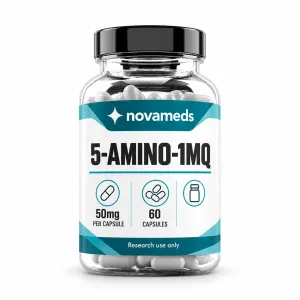
5-Amino-1MQ 50mg/capsule, 60 caps
5-Amino-1MQ 50mg/capsule, 60 caps
Currently unavailable
Original price was: A$119.99.A$83.99Current price is: A$83.99.
NovaMeds
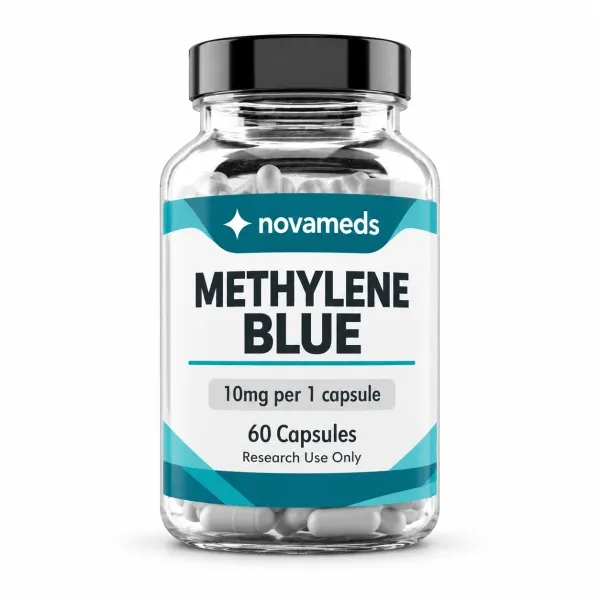
Methylene Blue is a heterocyclic aromatic chemical compound functioning as a redox indicator in research applications.
Presentation: Methylene Blue 10mg/60caps.
Illustrative packaging generated with AI.
Not for human or veterinary use.
Methylene Blue is a heterocyclic aromatic chemical compound functioning as a redox indicator in research applications. The compound demonstrates selective inhibition of guanylate cyclase and modulation of nitric oxide-dependent pathways in experimental models. Methylene Blue exhibits electron transfer properties in oxidation-reduction reactions and serves as a photosensitizer in chemical analysis.
| Chemical Formula | C16H18ClN3S |
|---|---|
| Synonyms | Methylthioninium chloride, 3,7-Bis(dimethylamino)phenothiazin-5-ium chloride |
| Molar Mass | 319.85 g/mol |
| CAS Number | 61-73-4 |
| PubChem CID | 6099 |
| Total Compound Content | 600 mg (10 mg per capsule) |
| Shelf Life | 36 months |
Methylene Blue is a phenothiazine-class redox-active compound with a reduction potential of approximately +11 mV, enabling reversible cycling between oxidized and reduced states. This property allows it to function as an electron carrier within oxidation-reduction systems and mitochondrial electron transport-associated pathways. Experimental investigations have examined its ability to accept electrons from NADH/NADPH-dependent redox systems and participate in electron transfer processes involving cytochrome-associated signaling networks and mitochondrial redox mechanisms.
Additional research has characterized interactions between Methylene Blue and protein aggregation systems, soluble guanylyl cyclase-associated signaling pathways, and concentration-dependent enzyme interaction profiles. The compound also exhibits well-defined photochemical properties, including strong absorption within the red region of the visible spectrum and the ability to participate in light-mediated redox reactions. These characteristics have established Methylene Blue as a valuable research tool for investigating electron transport dynamics, redox-regulated signaling processes, photochemical mechanisms, phenothiazine pharmacology, and oxidation-reduction pathway biology. Supplied in 10 mg capsules. Independently third-party HPLC-tested; COA available per batch.
Results refer to the tested sample. Check the batch and date in the report.
Methylene Blue possesses a reduction potential of approximately +11 mV and can reversibly cycle between oxidized and reduced states. This redox behavior enables participation in electron transfer reactions involving NADH/NADPH-dependent systems, cytochrome-associated pathways, and mitochondrial electron transport-related processes.
These characteristics have made Methylene Blue a valuable research tool for investigating electron transport dynamics, oxidation-reduction mechanisms, and redox-regulated signaling networks.
Experimental investigations have examined interactions between Methylene Blue and protein aggregation pathways, including studies of protein assembly dynamics, intermolecular association processes, and aggregation-related structural transitions. Its well-characterized molecular properties have established Methylene Blue as a useful compound for investigating aggregation mechanisms, protein interaction networks, and the physicochemical factors influencing protein organization.
Methylene Blue combines well-defined electron transfer properties, reversible redox cycling, and established photochemical characteristics within a single molecular scaffold. These features have made it a widely utilized reference compound for studies involving redox signaling, electron transport mechanisms, oxidation-reduction reactions, photochemical processes, phenothiazine pharmacology, and molecular pathway characterization associated with redox-active compounds.
Capsule excipients are not specified in the available product documentation.
5-Amino-1MQ 50mg/capsule, 60 caps
Currently unavailable
Ramelteon 8mg/capsule, 60 caps
Currently unavailable
Phenibut HCL (250mg/capsule), 60 Capsules
Currently unavailable
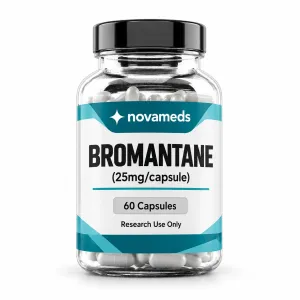
Bromantane (25mg/capsule), 60 Capsules
Currently unavailable