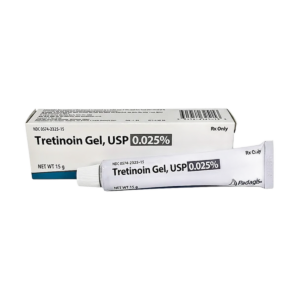
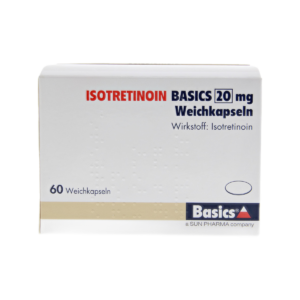
In dermatological science and aesthetic medicine, retinoids (derivatives of Vitamin A) represent the most extensively validated, evidence-based topical compounds for treating acne vulgaris, reversing ultraviolet-induced photoageing, and stimulating dermal collagen synthesis.
However, consumers and patients frequently encounter confusion between over-the-counter retinol and prescription tretinoin (all-trans retinoic acid, historically marketed as Retin-A). While both belong to the broad retinoid family, they are fundamentally distinct in their chemical structure, biological potency, cellular conversion steps, and regulatory classifications.
Tretinoin is a direct pharmaceutical hormone-like ligand that binds directly to nuclear receptors, whereas retinol is a cosmetic precursor that requires multi-step metabolic conversion within keratinocytes.
This article reviews the cellular biology of the retinoid conversion cascade, compares histological and clinical anti-ageing trial outcomes, explores titration concentrations, and details evidence-based protocols to manage retinoid dermatitis (“the purge” and peeling).
At a Glance: Molecular and Clinical Comparison
| Characteristic | Tretinoin (Retin-A, Ketrel, Treclin) | Retinol (Cosmetic Over-the-Counter) |
|---|---|---|
| Chemical Identity | All-trans retinoic acid (ATRA) | Pure Vitamin A alcohol |
| Active Biological Form? | Yes. Directly active at nuclear receptors | No. Inactive precursor requiring oxidation |
| Enzymatic Conversion | 0 steps (Immediate biological action) | 2 enzymatic steps (Alcohol Dehydrogenase + RALDH) |
| Relative Biological Potency | 1.0 (Baseline Reference) | ~0.05 (roughly 20x less potent) |
| Typical Concentrations | 0.025%, 0.05%, 0.1% | 0.1%, 0.3%, 0.5%, 1.0% |
| Time to Visible Clinical Results | 6 to 12 weeks | 12 to 24 weeks |
| Initial Irritation Risk | High (erythema, desquamation, stinging) | Low to moderate |
| Acne Clearance Indication | Officially approved prescription indication | Not an approved drug treatment for acne |
| Legal Classification | Prescription-Only Medicine (POM) | Over-the-counter cosmetic |
The Retinoid Conversion Cascade in Skin Cells
To exert any physiological effect on the skin, all topical Vitamin A derivatives must ultimately be converted into a single bioactive molecule: all-trans retinoic acid:
                       The Retinoid Metabolic Pathway
                                      │
               Retinyl Esters (Palmitate, Propionate, Acetate)
                                      │  [ Esterases ]
                                      ▼
                                   Retinol
                                      │  [ Alcohol Dehydrogenase (ADH) ]
                                      ▼
                               Retinaldehyde
                                      │  [ Retinaldehyde Dehydrogenase (RALDH) ]
                                      ▼
                       ALL-TRANS RETINOIC ACID (TRETINOIN)
                                      │
              ┌───────────────────────┴───────────────────────┐
              ▼                                               ▼
Nuclear Retinoic Acid Receptors (RAR)         Retinoid X Receptors (RXR)
• Downregulates MMP collagen breakdown       • Accelerates epidermal cell turnover
• Upregulates Type I & III collagen genes     • Compacts stratum corneum
- Retinyl Esters: The weakest cosmetic derivatives (retinyl palmitate, retinyl propionate). They require three enzymatic steps, resulting in negligible retinoic acid conversion and minimal clinical efficacy.
- Retinol: Requires two rate-limiting enzymatic steps:
- First, cytosolic alcohol dehydrogenases (ADHs) oxidize retinol into retinaldehyde.
- Second, retinaldehyde dehydrogenases (RALDHs) oxidize retinaldehyde into retinoic acid.
- The Metabolic Bottleneck: Keratinocytes strictly regulate these enzymatic steps. Only a small fraction (estimated at 2% to 6%) of topically applied retinol is converted into active retinoic acid; the remainder is esterified and stored or cleared.
- Tretinoin: Skips the enzymatic bottleneck entirely. Because it is already pure all-trans retinoic acid, it enters the cell and translocates directly into the cell nucleus, delivering 100% molecular bioavailability to nuclear receptors.
Nuclear Mechanism: How Retinoic Acid Reprograms Gene Expression
Tretinoin operates like a steroid hormone. Upon diffusing through the plasma membrane, it is bound by cellular retinoic acid-binding proteins (CRABP I and II) and transported into the nucleus:
- RAR and RXR Heterodimers: Tretinoin binds specifically to retinoic acid receptors (RAR-α, RAR-β, RAR-γ), which form heterodimers with retinoid X receptors (RXRs).
- Direct Genomic Transcription: These heterodimers bind to specific DNA sequences known as Retinoic Acid Response Elements (RAREs) in the promoter regions of target genes, switching on transcription of genes responsible for:
- Epidermal Renewal: Accelerating basal keratinocyte proliferation and shedding of hyperkeratinized stratum corneum cells (preventing the formation of microcomedones in acne).
- Dermal Extracellular Matrix Biosynthesis: Activating dermal fibroblasts to produce pro-collagen Type I and Type III, tropoelastin, and hyaluronic acid.
- MMP Inhibition (Anti-Catabolic): Tretinoin directly suppresses activator protein-1 (AP-1), a transcription factor induced by UV radiation that triggers matrix metalloproteinases (MMP-1 collagenase, MMP-3 stromelysin, MMP-9 gelatinase). By shutting down AP-1, tretinoin halts the enzymatic breakdown of existing dermal collagen.
Clinical Trial Evidence for Photoageing and Collagen Synthesis
The clinical validation of tretinoin is unmatched in dermatology, initiated by landmark trials by Dr. Albert Kligman and Dr. John Voorhees in the 1980s and 1990s:
1. The Voorhees Double-Blind Histological Trials
In landmark randomized trials published in JAMA and the New England Journal of Medicine:
- Patients applied 0.05% tretinoin cream or vehicle to photodamaged forearms and faces over 4 to 12 months.
- Biopsy Findings: Full-thickness skin biopsies revealed that tretinoin produced an 80% increase in collagen-anchoring fibril density in the papillary dermis.
- Type I pro-collagen mRNA increased by multiple-fold, while epidermal thickness increased by an average of 30%, reversing the epidermal atrophy characteristic of intrinsic and actinic ageing.
2. Clinical Outcomes in Wrinkles and Hyperpigmentation
- Fine Lines and Wrinkles: Significant clinical smoothing of periorbital and perioral fine lines occurred by month 3, with progressive improvements in deeper wrinkles observed through months 6 to 12.
- Melanin Dispersion: Tretinoin accelerated the turnover of melanin-laden keratinocytes, dispersing irregular pigment clumps and fading solar lentigines (age spots) far more rapidly than retinol.
Tretinoin Concentrations: 0.025%, 0.05% vs 0.1%
Prescription tretinoin is standardly formulated in three distinct concentrations:
| Concentration | Primary Clinical Indications | Efficacy Profile | Irritation Potential |
|---|---|---|---|
| 0.025% | Initiation phase, sensitive skin, anti-ageing maintenance | Excellent long-term collagen synthesis; identical to 0.1% at 12 months | Lowest irritation; ideal for beginner tolerance |
| 0.05% | Standard therapeutic concentration for photoageing & mild acne | Accelerated dermal remodelling and wrinkle reduction | Moderate irritation; requires acclimatization |
| 0.1% | Severe cystic acne, severe hyperkeratosis, thick oily skin | Fastest onset of acne comedolysis and hyperpigmentation fading | Highest irritation; significant risk of retinoid dermatitis |
Crucial Dermatological Insight: A landmark double-blind trial by Griffiths and colleagues (Archives of Dermatology) compared 0.025% vs 0.1% tretinoin over 48 weeks. While 0.1% produced faster improvements at 12 weeks, by week 48 both concentrations achieved statistically identical improvements in histological collagen synthesis and wrinkle reduction, but 0.025% caused dramatically less irritation and peeling.
Managing Retinoid Dermatitis, Purging and the “Sandwich Method”
The primary barrier to successful tretinoin therapy is retinoid dermatitis: acute erythema, barrier impairment, scaling, dryness, and transient inflammatory acne flare-ups (“the purge”).
Why “Purging” Occurs
Tretinoin accelerates epidermal turnover, compressing a normal 28-day shedding cycle into 10 to 14 days. Sub-clinical microcomedones already forming deep within pores are rapidly propelled to the surface simultaneously, causing a temporary surge in visible breakouts during weeks 2 to 6. This is not an allergic reaction; it is a mechanical clearance of pre-existing microcomedones.
The Evidence-Based Initiation Protocol:
- Low Frequency Titration:
- Weeks 1–2: Apply twice weekly at night.
- Weeks 3–4: Apply every other night.
- Week 5 onwards: Increase to nightly application as tolerated.
- The “Pea-Sized” Rule: Apply no more than a single pea-sized amount (~0.25 g) for the entire face. Using excess product increases barrier toxicity without accelerating collagen synthesis.
- The “Sandwich Method” for Sensitive Skin:
- Step 1: Apply a light layer of non-comedogenic ceramide-rich moisturizer.
- Step 2: Allow to dry for 10 minutes, then apply the pea-sized tretinoin.
- Step 3: Layer a richer barrier cream over the top.
- Clinical Note: The sandwich method buffers the rate of stratum corneum penetration, markedly reducing trans-epidermal water loss (TEWL) and erythema without abolishing nuclear gene transcription.
- Mandatory Sunscreen: Tretinoin thins the outer non-viable stratum corneum, increasing susceptibility to UV erythema. Daily broad-spectrum SPF 30–50 is medically mandatory.
Regulatory Landscape: Prescription vs Cosmetic Restrictions
The international regulatory standing of retinoids reflects their pharmacological potency:
- Tretinoin (Prescription-Only): In the UK (MHRA), United States (FDA), and European Union (EMA), tretinoin is strictly a prescription medicinal product. It cannot be legally sold in cosmetic over-the-counter creams.
- European Cosmetic Retinol Caps (2024–2026): In 2024, the European Commission, following recommendations from the Scientific Committee on Consumer Safety (SCCS), enacted regulations restricting over-the-counter retinol, retinyl acetate, and retinyl palmitate to a maximum concentration of 0.3% in facial cosmetics (and 0.05% in body lotions) due to concerns regarding cumulative dietary and topical Vitamin A exposure.
- Pregnancy Warning: All retinoids—both prescription tretinoin and cosmetic retinol—are strictly contraindicated during pregnancy and breastfeeding due to the theoretical risk of teratogenicity.
Frequently Asked Questions
Can I use retinol around my eyes, but tretinoin on my face?
Yes. The periorbital skin is approximately one-third the thickness of facial skin and contains fewer sebaceous glands, making it exceptionally vulnerable to retinoid dermatitis. Many patients use a gentle 0.1%–0.3% encapsulated retinol eye cream for crows’ feet while applying prescription 0.025% tretinoin to the rest of the face.
Does tretinoin thin the skin over time?
This is a persistent myth. Tretinoin thins only the dead, outermost stratum corneum (removing dull, dead corneocytes). In the deeper, living layers, tretinoin thickens the viable epidermis and dramatically increases the depth and density of the dermal collagen matrix, resulting in thicker, more structurally resilient skin over years of continuous use.
Can I use tretinoin alongside chemical exfoliants (AHA / BHA)?
During the first 3 to 6 months of initiating tretinoin, all alpha-hydroxy acids (glycolic, lactic) and beta-hydroxy acids (salicylic) should be paused. Combining chemical peels with retinoid-induced cellular turnover almost universally precipitates severe cutaneous barrier breakdown, contact dermatitis, and prolonged post-inflammatory hyperpigmentation (PIH).
Related reading: GHK-Cu Copper Peptide: Evidence for Skin Remodelling and Wound Repair · Isotretinoin (Roaccutane): Evidence, Safety, Teratogenicity and Monitoring · Finasteride vs Minoxidil: Different Approaches to Hair Loss
Scientific references
- Weiss JS, et al. Topical tretinoin improves photoaged skin. A double-blind vehicle-controlled study. JAMA. 1988;259(4):527-532. PubMed PMID: 3336176
- Kligman AM. The treatment of photoaged skin with topical tretinoin. International Journal of Dermatology. 1989;28(9):608-610.
- Fisher GJ, et al. Molecular mechanisms of photoaging and its prevention by retinoic acid: ultraviolet irradiation induces MAP kinase-mediated AP-1 activation that represses collagen synthesis. Journal of Clinical Investigation. 1996;97(3):681-689. PubMed PMID: 8609223
- Griffiths CE, et al. Two concentrations of topical tretinoin (retinoic acid) cause similar improvement of photoaging but different degrees of irritation: a double-blind, vehicle-controlled comparison of 0.1% and 0.025% tretinoin creams. Archives of Dermatology. 1995;131(9):1037-1044. PubMed PMID: 7661603
- Kang S, et al. Application of retinol to human skin in vivo induces epidermal hyperplasia and cellular retinoid binding proteins characteristics of retinoic acid but with less irritation. Journal of Investigative Dermatology. 1995;105(4):549-556. PubMed PMID: 7561157
This article is educational and does not constitute personalized treatment advice. Treatment decisions depend on individual circumstances and professional assessment.