Testosterone replacement therapy (TRT) is the established medical standard for treating male hypogonadism—a clinical condition characterized by deficient endogenous testosterone production accompanied by fatigue, loss of libido, erectile dysfunction, depressive mood, sarcopenia, and bone mineral density loss.
Historically, testosterone pharmacotherapy was burdened by pharmacological challenges. Native testosterone undergoes near-complete hepatic first-pass metabolism when swallowed, rendering oral delivery ineffective, while early synthetic 17-α-alkylated oral preparations (such as methyltestosterone) were notorious for severe peliosis hepatis and liver failure. Injectable short-chain esters (testosterone propionate, cypionate, and enanthate) required frequent weekly or bi-weekly injections and provoked turbulent, non-physiological “roller-coaster” hormone spikes and crashes.
Testosterone undecanoate (TU) revolutionized this landscape. By esterifying testosterone with an 11-carbon aliphatic fatty acid chain, researchers created an ultra-lipophilic prodrug capable of two distinct pharmacological delivery modes:
- Long-Acting Intramuscular Depot (Nebido / Aveed): Providing steady, physiological serum testosterone concentrations for 10 to 14 weeks per single injection.
- Modern Oral Formulations (Jatenzo / Tlando): Absorbed via the intestinal lymphatic system, completely bypassing the portal vein and hepatic first-pass metabolism without liver toxicity.
This article reviews the cellular pharmacokinetics of both delivery formats, landmark safety findings from the 5,000-patient TRAVERSE cardiovascular trial, hematological risks (erythrocytosis/polycythemia), and international prescribing guidelines.
Pharmacology: The 11-Carbon Ester Chain
Native, unesterified testosterone has an exceptionally short biological half-life in human circulation (approximately 10 to 20 minutes). When unesterified testosterone is absorbed from the digestive tract into the mesenteric veins, it flows directly into the portal circulation of the liver, where hepatic hydroxysteroid dehydrogenases and UDP-glucuronosyltransferases inactivate over 98% of the dose on its first pass.
                    Native Testosterone vs Testosterone Undecanoate
                                         │
        ┌────────────────────────────────┴────────────────────────────────┐
        ▼                                                                 ▼
Native Testosterone (Oral)                                Testosterone Undecanoate
• Absorbed into mesenteric portal vein                   • 11-carbon aliphatic ester chain
• 98% destroyed by hepatic first-pass                    • Highly lipophilic ($LogP > 6.0$)
• Negligible systemic bioavailability                   • Dissolves in lipid vehicle / chylomicrons
• Ineffective for oral therapy                           • Enables deep tissue depot & lymphatic entry
To prolong its biological activity, chemists esterify the 17-β hydroxyl group:
- Testosterone Undecanoate (TU): Features an aliphatic chain of 11 carbon atoms (C30H48O3, molecular weight 456.7 g/mol).
- The Prodrug Activation: The ester chain itself possesses zero androgenic activity; it cannot bind to human androgen receptors.
- Once in the human body, non-specific ubiquitous endogenous esterases in plasma, red blood cells, and peripheral tissues gradually cleave the ester bond, releasing biologically active, molecularly identical bioidentical human testosterone.
Intramuscular Depot (Nebido / Aveed): The 10–14 Week Protocol
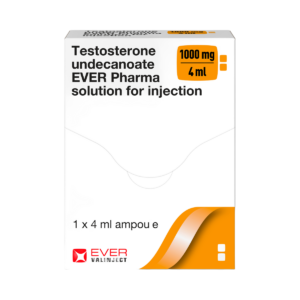
In injectable form, testosterone undecanoate is formulated in high concentration (250 mg/mL) dissolved in refined castor oil with benzyl benzoate as a co-solvent:
1. The Depot Mechanism
- Administered as a 4 mL intramuscular injection delivering 1,000 mg of testosterone undecanoate deeply into the ventrogluteal or dorsogluteal muscle.
- Because the castor oil formulation is exceptionally viscous and hydrophobic, a large intramuscular depot forms. The drug slowly partitions out of the lipid depot into the surrounding interstitial fluid over months, with a terminal elimination half-life of 33 to 34 days.
2. The Standard Administration Protocol:
To avoid a sub-therapeutic trough during the initial months, a loading dose is clinically mandatory:
- Injection 1 (Day 0): 1,000 mg IM injection.
- Injection 2 (Week 6 – Loading Dose): 1,000 mg IM injection at 6 weeks.
- Maintenance Injections: 1,000 mg IM administered every 10 to 14 weeks (typically every 12 weeks), titrated according to trough serum total testosterone measured immediately prior to the next injection.
Intramuscular Dosing Timeline:
[Day 0] 1,000 mg ──> [Week 6] 1,000 mg (Loading) ──> [Week 18] 1,000 mg ──> Every 10-14 Weeks
Clinical Advantage: Eliminates the frequent injections, fluctuating mood, and emotional instability associated with weekly injections of testosterone enanthate or cypionate.
Oral Testosterone Undecanoate: Lymphatic Absorption Mechanisms
For decades, the search for a non-hepatotoxic oral testosterone was considered unachievable without causing liver damage. The development of self-emulsifying oral testosterone undecanoate formulations (Jatenzo, Tlando) solved this through intestinal lymphatic targeting:
How Lymphatic Absorption Bypasses the Liver:
- The Role of Dietary Lipids: Oral TU capsules contain testosterone undecanoate dissolved in a specialized lipid vehicle. The medication must be ingested with a meal containing at least 15 to 30 grams of dietary fat.
- Micellar Incorporation: Pancreatic lipases digest dietary triglycerides into free fatty acids and monoglycerides, forming mixed lipid micelles in the intestinal lumen that incorporate the highly lipophilic TU molecules.
- Chylomicron Packaging: Inside the intestinal enterocyte, enterocytes package digested lipids and intact testosterone undecanoate into chylomicrons.
- Thoracic Duct Transport: Because chylomicrons are too large to enter capillary fenestrations in the portal veins, they are exocytosed into the intestinal lacteals (lymphatic vessels).
- Systemic Drainage: The lymph flows up through the thoracic duct, draining directly into the systemic circulation at the junction of the left internal jugular and subclavian veins, completely bypassing the portal vein and hepatic first-pass metabolism.
Pharmacokinetic Comparison: Depot vs Oral vs Short Esters
| Parameter | Short Esters (Enanthate / Cypionate) | Injectable Depot (Nebido / Aveed) | Oral TU (Jatenzo) |
|---|---|---|---|
| Dosing Frequency | Every 7 to 14 days | Once every 10 to 14 weeks | Twice daily with meals |
| Route | Intramuscular or Subcutaneous | Deep Intramuscular gluteal | Oral capsule |
| Half-Life (t1/2) | 4.5 to 8 days | ~33 to 34 days | ~4 to 5 hours (systemic clearance) |
| Plasma Profile | High supra-physiological peaks, low troughs | Smooth, stable physiological plateau | Peaks at ~4h; mimics diurnal rhythm |
| Injection Volume | 0.5 mL to 1.0 mL | 4.0 mL (large volume, slow injection) | None |
| PPO Pulmonary Oil Microembolism Risk | Negligible | Rare (~1% Aveed, cough during injection) | Zero |
| Food Dependency | None | None | Strictly requires dietary fat |
Cardiovascular Evidence: What the TRAVERSE Trial Proved
For over a decade, testosterone therapy was clouded by conflicting observational studies suggesting TRT might increase the risk of heart attacks and strokes, prompting the US FDA to mandate class-wide cardiovascular warnings in 2015.
The definitive answer was delivered in July 2023 with the publication of the TRAVERSE trial in the New England Journal of Medicine:
- Trial Design: A multicentre, randomized, double-blind, placebo-controlled trial enrolling 5,246 men aged 45 to 80 with documented hypogonadism (two morning fasting total testosterone levels <300 ng/dL) and established cardiovascular disease or high cardiovascular risk.
- Duration: Followed for a median of 33 months.
- Primary Endpoint: First occurrence of any component of a major adverse cardiovascular event (MACE): death from cardiovascular causes, non-fatal myocardial infarction, or non-fatal stroke.
| TRAVERSE Trial Outcomes | Testosterone Group (N=2,601) | Placebo Group (N=2,604) | Hazard Ratio (95% CI) |
|---|---|---|---|
| Primary MACE Composite | 182 patients (7.0%) | 190 patients (7.3%) | 0.96 (0.78–1.17) (Non-inferior) |
| Cardiovascular Death | 81 patients (3.1%) | 86 patients (3.3%) | 0.94 (0.69–1.28) |
| Non-fatal Myocardial Infarction | 68 patients (2.6%) | 75 patients (2.9%) | 0.90 (0.65–1.26) |
| Non-fatal Stroke | 46 patients (1.8%) | 39 patients (1.5%) | 1.18 (0.77–1.81) |
The TRAVERSE Verdict: Restoring testosterone to normal physiological ranges in hypogonadal men does not increase the risk of major adverse cardiovascular events. It proved that physiological TRT is cardiovascularly safe when properly monitored.
Adverse Reactions, Polycythemia and Prostate Surveillance
While safe when properly prescribed, testosterone undecanoate carries important physiological monitoring requirements:
1. Secondary Erythrocytosis (Elevated Hematocrit)
Testosterone directly stimulates renal erythropoietin (EPO) secretion and downregulates hepcidin, increasing intestinal iron absorption and accelerating bone marrow erythropoiesis:
- Hematocrit (Hct) Safety Thresholds: Normal adult male hematocrit is 40% to 50%.
- Action Levels: If hematocrit rises above 52%, clinicians consider extending injection intervals. If hematocrit exceeds 54%, therapy must be withheld or the dose reduced, and therapeutic phlebotomy (venesection) may be required to prevent blood hyperviscosity and secondary thromboembolism.
2. Prostate Health (PSA Surveillance)
Modern urological consensus (e.g. Morgentaler’s androgen receptor saturation model) confirms that testosterone does not cause de novo prostate cancer. However, androgens can stimulate pre-existing androgen-sensitive malignant clones.
- Monitoring Protocol: Serum Prostate-Specific Antigen (PSA) and digital rectal examination (DRE) are mandatory at baseline, at 3 to 6 months, and annually thereafter. A confirmed PSA increase >1.4 ng/mL within 12 months warrants urological referral.
3. Suppression of Spermatogenesis and Fertility
Exogenous testosterone suppresses pituitary gonadotropin secretion (LH and FSH) via negative feedback, shutting down intra-testicular testosterone synthesis and halting spermatogenesis:
- Fertility Warning: TRT induces severe oligospermia or azoospermia in over 90% of men within 6 months. It is contraindicated in men actively seeking fertility. Preserving fertility requires alternative therapies (such as human chorionic gonadotropin / hCG or selective estrogen receptor modulators / SERMs).
International Approvals and Controlled Substance Regulations
The availability and brand names of testosterone undecanoate vary globally:
- United Kingdom & Europe: Marketed as Nebido (Bayer / Grünenthal). It is the premier first-line injectable TRT across the NHS and European private urology. Classified as a Class C / Schedule 4 Controlled Substance in the UK.
- United States: Marketed as Aveed (Endo Pharmaceuticals). In the US, Aveed carries a boxed warning and is distributed under a REMS program due to the risk of Pulmonary Oil Microembolism (POME) if castor oil enters a vein accidentally. Oral testosterone undecanoate is FDA-approved under the brand names Jatenzo and Tlando. Classified as a Schedule III Controlled Substance (DEA).
- NovaMeds Position: Testosterone undecanoate is catalogued as a commercial prescription medicine subject to strict endocrinological assessment, proof of baseline hypogonadism, and compliance with national controlled substance legislation.
Frequently Asked Questions
Can I switch directly from weekly Sustanon or Enanthate to Nebido?
Yes. Clinicians routinely transition patients from short-acting esters to testosterone undecanoate. The standard protocol is to administer the first 1,000 mg Nebido injection on the day the next short-acting injection would have been due, followed by the mandatory 6-week loading booster before entering the 12-week maintenance cycle.
Why is the Nebido injection injected so slowly?
Nebido is a 4 mL injection of thick, highly viscous castor oil. Prescribing guidelines mandate that the injection be administered very slowly (over a full 2 minutes) deeply into the gluteal muscle. Rapid injection causes severe local muscle pain, tissue trauma, and increases the theoretical risk of pulmonary oil microembolism (POME), which causes transient coughing and dizziness.
Does oral Jatenzo cause liver damage like old testosterone pills?
No. Old 17-α-alkylated oral steroids (like methyltestosterone) were toxic because the 17-alkyl group placed metabolic strain on hepatocytes. Testosterone undecanoate is not 17-alkylated; it is an esterified bioidentical testosterone that bypasses the liver via lymphatic absorption. In extensive Phase 3 trials, Jatenzo caused zero cases of liver injury, jaundice, or peliosis hepatis.
Related reading: Sildenafil vs Tadalafil: Duration, Food Interactions and Clinical Choice · Bremelanotide (PT-141): Central Melanocortin Agonism for Hypoactive Sexual Desire · Finasteride vs Dutasteride: Mechanisms and Clinical Evidence
Scientific references
- Lincoff AM, et al. Cardiovascular Safety of Testosterone-Replacement Therapy (The TRAVERSE Trial). New England Journal of Medicine. 2023;389(2):107-117. PubMed PMID: 37326322
- Bhasin S, et al. Testosterone Therapy in Men With Hypogonadism: An Endocrine Society Clinical Practice Guideline. Journal of Clinical Endocrinology & Metabolism. 2018;103(5):1715-1744. PubMed PMID: 29562364
- Morgentaler A, et al. Testosterone and Cardiovascular Disease—The Controversy and the Evidence. Mayo Clinic Proceedings. 2015;90(7):939-951. PubMed PMID: 26071400
- Electronic Medicines Compendium (emc). Nebido 1000 mg/4 ml, solution for injection: Summary of Product Characteristics (SmPC). UK Medicines and Healthcare products Regulatory Agency (MHRA); Updated 2024.
- Swerdloff RS, et al. Oral Testosterone Undecanoate with a Self-Emulsifying Drug Delivery System (Jatenzo) for Hypogonadal Men. Journal of Clinical Endocrinology & Metabolism. 2020;105(8):2515-2531. PubMed PMID: 32369562
This article is educational and does not constitute personalized treatment advice. Treatment decisions depend on individual circumstances and professional assessment.