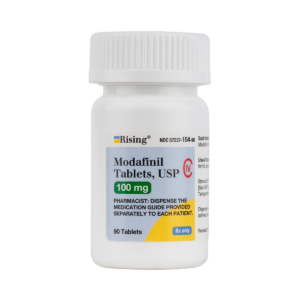
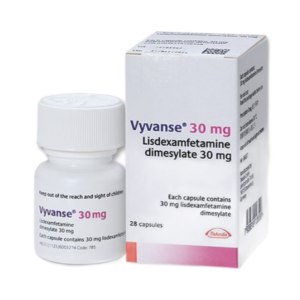
Modafinil (marketed under the brand names Provigil, Modavigil, and generic formulations) is a wakefulness-promoting agent classified pharmacologically as a eugeroic. Originally developed in France by Lafon Laboratories in the 1970s, modafinil was licensed by the US Food and Drug Administration (FDA) and European regulatory bodies for the treatment of excessive daytime sleepiness associated with narcolepsy, obstructive sleep apnea (OSA), and shift work sleep disorder (SWSD).
Beyond its authorized sleep-medicine indications, modafinil has acquired international renown as one of the most widely used off-label “smart drugs” or cognitive enhancers (nootropics) among university students, shift-workers, military personnel, and knowledge professionals seeking to maintain executive function during sleep deprivation.
Unlike classical psychostimulants (such as dextroamphetamine or methylphenidate), modafinil does not provoke intense peripheral sympathomimetic stimulation, profound euphoria, or severe rebound hypersomnia.
This clinical review examines the molecular pharmacology of modafinil—focusing on atypical dopamine transporter (DAT) binding and hypothalamic orexin activation—its cognitive efficacy profile in sleep-deprived and well-rested populations, its critical drug interaction with hormonal contraceptives, and its regulatory status.
Molecular Pharmacology: How Modafinil Differs from Amphetamines
Traditional psychostimulants and eugeroics operate through contrasting neurochemical mechanisms:
Amphetamines (Adderall, Vyvanse):
Enters Presynaptic Neuron (VMAT2) ──> Forces Dopamine Out of Vesicles ──> Reverses DAT Pump
(Massive, explosive non-physiological dopamine release ──> High euphoria & addiction liability)

Modafinil (Provigil):
Binds Atypically to DAT Channel ──> Slowly Blocks Dopamine Re-uptake ──> Prolongs Natural Signaling
(No vesicular depletion, no pump reversal, no massive dopamine surge ──> Low abuse potential)
- Amphetamines: Act as substrates for the dopamine transporter, entering the presynaptic terminal, disrupting vesicular monoamine transporter 2 (VMAT2), and actively reversing the direction of the DAT pump, flooding the synapse with massive non-physiological surges of dopamine and norepinephrine.
- Modafinil: Acts as a pure reuptake blocker with unique binding kinetics. It binds to a different conformational site on the dopamine transporter than cocaine or methylphenidate. It stabilizes the transporter in an outward-facing conformation without depleting vesicular pools or reversing the transporter.
- The Result: Modafinil increases synaptic dopamine slowly and smoothly, amplifying normal physiological neurotransmission without the abrupt spike that generates addictive reinforcement.
The Role of Dopamine, Orexin and Histamine Circuits
Modafinil’s wake-promoting actions rely on a distributed subcortical network:
1. Dopaminergic Essentiality
Volkow and colleagues conducted a seminal PET study published in JAMA (2009) demonstrating that therapeutic doses of modafinil (200 mg) occupy 51.4% of dopamine transporters in the human nucleus accumbens and caudate putamen. When genetically engineered mice lacking the dopamine transporter (DAT-/- knockout mice) were administered modafinil, the drug was completely unable to promote wakefulness, confirming that DAT inhibition is an obligate primary mechanism.
2. Orexin / Hypocretin Activation
Modafinil selectively activates the orexin (hypocretin) neuropeptide system in the perifornical area of the lateral hypothalamus:
- Orexin neurons act as the master “stabilizer” of the sleep-wake flip-flop switch, preventing inappropriate intrusions of REM sleep into wakefulness (the primary pathology in narcolepsy).
- Orexin projecting neurons innervate the locus coeruleus (noradrenaline) and the tuberomammillary nucleus (histamine), driving tonic wakefulness.
3. Tuberomammillary Histaminergic Signaling
In the anterior hypothalamus, modafinil triggers local release of neuronal histamine via H1 receptors. Histamine is one of the brain’s most potent endogenous wake-promoting neurochemicals; stimulating this pathway explains why modafinil keeps individuals alert without inducing whole-body muscular restlessness.
Sleep Architecture: Preservation of REM and Slow-Wave Sleep
A critical disadvantage of traditional amphetamines is that they profoundly disrupt human sleep architecture, completely suppressing rapid eye movement (REM) sleep and depleting restorative Stage 3/4 slow-wave sleep. When amphetamines wear off, patients experience severe “REM rebound,” characterized by vivid nightmares, sleep paralysis, and severe cognitive exhaustion.
Polysomnographic sleep-laboratory studies demonstrate that modafinil has a remarkably benign profile:
- When taken in the morning (100–200 mg), modafinil is largely cleared by nighttime (terminal elimination half-life is 12 to 15 hours).
- Subsequent nocturnal sleep exhibits normal sleep architecture: total duration of REM sleep and deep slow-wave sleep are preserved.
- Patients do not experience the profound post-treatment hypersomnia “crash” typical of amphetamine withdrawal.
Cognitive Enhancement: Sleep-Deprived vs Well-Rested Evidence
Modafinil’s reputation as a cognitive enhancer has been subjected to rigorous systematic review:
1. In Sleep-Deprived Populations (Robust Efficacy)
The cognitive benefits of modafinil in sleep-deprived individuals are unequivocal:
- Military, aviation, and emergency medicine trials (e.g. Wesensten et al., US Army Aeromedical Research Laboratory) show that 200 mg of modafinil maintains psychomotor vigilance, visual tracking, working memory, and situational awareness at near-baseline levels across 24 to 48 hours of continuous sleep deprivation, outperforming placebo and matching 20 mg of dextroamphetamine without the attendant cardiovascular side effects.
2. In Well-Rested Healthy Adults (Selective Efficacy)
A comprehensive 2015 meta-analysis published in European Neuropsychopharmacology by Battleday and Brem reviewed all double-blind, placebo-controlled trials of modafinil in non-sleep-deprived healthy adults:
- Executive Function and Planning: Modafinil produced statistically significant improvements in higher-order cognitive tasks, particularly the Tower of London test (spatial planning), Wisconsin Card Sorting test, and delayed visual recognition memory.
- Task Salience: Participants reported that repetitive, demanding, or complex tasks felt more intrinsically engaging and interesting.
- Creativity Limitation: Modafinil did not improve divergent thinking or raw creative generation; in some testing paradigms, it slightly increased response latency (reaction time), as participants paused to evaluate decisions more deliberatively rather than acting impulsively.
Modafinil vs Armodafinil: Enantiomer Pharmacokinetics
Modafinil is a racemic mixture composed of equal parts of two optical enantiomers: S-modafinil and R-modafinil:
| Parameter | Modafinil (Racemic Mixture) | Armodafinil (R-Enantiomer Alone, Nuvigil) |
|---|---|---|
| Composition | 50% S-enantiomer / 50% R-enantiomer | 100% R-enantiomer (Armodafinil) |
| S-Enantiomer Half-Life | 3 to 4 hours (cleared rapidly by liver) | Absent |
| R-Enantiomer Half-Life | 12 to 15 hours (prolonged clearance) | 12 to 15 hours |
| Plasma Concentration Curve | Peaks early (2h), then declines moderately | Slower initial peak, higher afternoon plasma levels |
| Standard Dosing | 100 mg to 200 mg once daily | 150 mg to 250 mg once daily |
Because the S-enantiomer is cleared three times faster than the R-enantiomer, racemic modafinil exhibits an early morning peak that gradually declines by late afternoon. Armodafinil (Nuvigil) delivers pure R-enantiomer, maintaining higher systemic drug concentrations 6 to 14 hours post-dose, which can be advantageous for late-shift workers but increases the risk of sleep-onset insomnia if taken late in the day.
Adverse Effects and Rare Dermatological Hazards (SJS)
For the vast majority of patients, modafinil is well tolerated:
- Common Side Effects: Headache (reported in 15%–20% of patients, typically responsive to hydration and mild analgesics), mild nausea, anxiety, insomnia (if taken after 12:00 PM), dry mouth, and mild appetite suppression.
- Cardiovascular: Mild increases in resting heart rate (+2 to +4 bpm) and blood pressure (+2 to +3 mmHg).
The Serious Cutaneous Reaction Warning (Stevens-Johnson Syndrome)
In 2007, the FDA issued a safety warning regarding rare, serious cutaneous adverse reactions:
- Modafinil has been implicated in rare cases of severe cutaneous adverse reactions (SCAR), including Stevens-Johnson syndrome (SJS), toxic epidermal necrolysis (TEN), and drug rash with eosinophilia and systemic symptoms (DRESS).
- Warning Signs: The emergence of any new, unexplained skin rash, hives, blistering of the oral mucosa, lips, or conjunctiva, accompanied by fever, requires immediate drug cessation and emergency hospital evaluation.
The CYP3A4 Enzyme Interaction: Contraceptive Failure
The most clinically significant drug-drug interaction associated with modafinil is its effect on hepatic enzyme induction:
- CYP3A4 Induction: Modafinil is a potent, dose-dependent inducer of the cytochrome P450 3A4 (CYP3A4) enzyme system in the liver and intestinal mucosa.
- The Mechanism of Contraceptive Failure: The synthetic estrogens (ethinyl estradiol) and progestins used in combined oral contraceptive pills, progestin-only pills, contraceptive implants (Nexplanon), and vaginal rings are heavily metabolized by CYP3A4. Modafinil dramatically accelerates the metabolic breakdown and clearance of these hormones, reducing their systemic bioavailability below the threshold required to suppress ovulation.
- Clinical Directive: Unintended pregnancies have occurred frequently. Female patients taking any form of hormonal contraception must use an alternative non-hormonal method (e.g. copper intrauterine device / IUD or barrier methods) while taking modafinil and for two full menstrual cycles (at least 60 days) after discontinuing modafinil.
Abuse Liability and Dependence Profile
Because modafinil binds the dopamine transporter, regulatory agencies have subjected it to rigorous abuse liability testing:
- Schedule Classification: The US DEA classifies modafinil as a Schedule IV Controlled Substance, placing it in the same category as benzodiazepines (substantially lower than Schedule II amphetamines and methylphenidate). In the UK, it is a prescription-only medicine (POM) subject to misuse monitoring.
- Lack of Significant Euphoria: While PET imaging confirms striatal dopamine elevation, modafinil does not produce the intense, rush-like euphoria that drives compulsive intravenous or intranasal self-administration. In human drug-discrimination studies, individuals with histories of cocaine abuse discriminated modafinil as distinct from cocaine and amphetamine.
- Physical Dependence: Severe physical withdrawal syndromes do not occur upon cessation, though patients may experience rebound sleepiness and lethargy reflecting unmasked sleep debt.
Frequently Asked Questions
Can I drink coffee while taking modafinil?
While small amounts of caffeine are generally tolerated, combining high doses of caffeine with modafinil frequently triggers peripheral tremors, palpitations, elevated blood pressure, gastrointestinal distress, and heightened anxiety. It is recommended to reduce or eliminate caffeine intake on days modafinil is ingested.
Does modafinil show up on standard workplace drug tests?
No. Standard 5-panel or 10-panel workplace drug screens (which test for amphetamines, opiates, cannabinoids, cocaine, and PCP) do not cross-react with modafinil. However, modafinil is strictly tested for and prohibited in competitive athletics by WADA (World Anti-Doping Agency) under Section S6 (Stimulants).
Can modafinil replace sleep permanently?
No. Modafinil masks the physiological sensation of sleepiness (sleep pressure mediated by adenosine), but it cannot replace the essential biological functions of sleep, such as glymphatic brain waste clearance, cellular repair, and memory consolidation. Chronic sleep deprivation masked by modafinil eventually leads to profound cognitive deficits, emotional instability, and metabolic dysregulation.
Related reading: Lisdexamfetamine vs D-Amphetamine: Prodrug Pharmacokinetics and Abuse Liability · Rapamycin (Sirolimus) for Longevity: mTOR Inhibition, Human Evidence and Safety · What Are Peptides? A Guide to Peptide Medicines and Research
Scientific references
- Volkow ND, et al. Effects of modafinil on dopamine and dopamine transporters in the male human brain: clinical implications. JAMA. 2009;301(11):1148-1154. PubMed PMID: 19293415
- Battleday RM, Brem AK. Modafinil for cognitive neuroenhancement in healthy non-sleep-deprived subjects: A systematic review. European Neuropsychopharmacology. 2015;25(11):1865-1881. PubMed PMID: 26319340
- Scammell TE, et al. Modafinil activates hypothalamic orexin/hypocretin neurons. Journal of Neuroscience. 2000;20(22):8620-8628. PubMed PMID: 11069941
- Electronic Medicines Compendium (emc). Provigil 100 mg tablets: Summary of Product Characteristics (SmPC). UK Medicines and Healthcare products Regulatory Agency (MHRA); Updated 2024.
- US Food and Drug Administration (FDA). Modafinil (marketed as Provigil): Safety Labeling Changes. FDA Safety Communications; Revised 2023.
This article is educational and does not constitute personalized treatment advice. Treatment decisions depend on individual circumstances and professional assessment.