BPC-157 — 500 µg/capsule · 60 capsules
500 µg/capsule · 60 capsules
Currently unavailable
Original price was: C$96.C$67.20Current price is: C$67.20.
NovaMeds
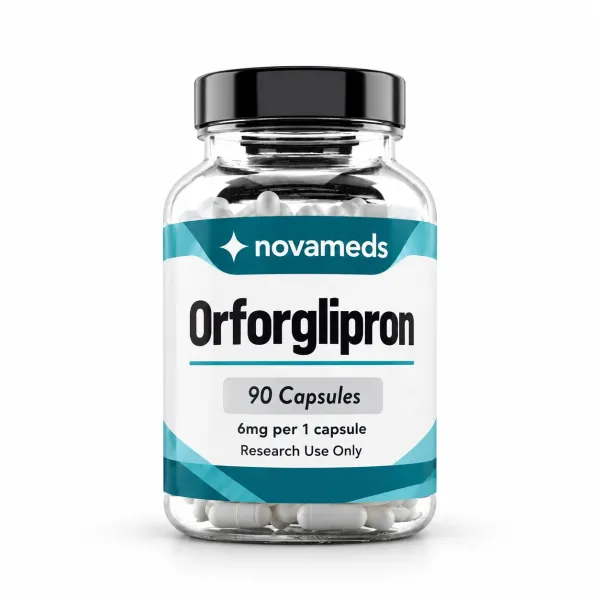
Orforglipron is a synthetic, non-peptidic GLP-1 receptor agonist studied in controlled research environments for its role in modulating glucagon-like peptide-1 signalling pathways.
Presentation: Orforglipron 6mg / 90caps.
Illustrative packaging generated with AI.
Not for human or veterinary use.
Orforglipron is a synthetic, non-peptidic GLP-1 receptor agonist studied in controlled research environments for its role in modulating glucagon-like peptide-1 signalling pathways. Research focuses on its activity in cAMP-dependent pathways, receptor activation dynamics, and peptide-regulated energy balance mechanisms.
Unlike traditional GLP-1 analogues, Orforglipron demonstrates oral bioactivity and high receptor selectivity, making it suitable for experimental models evaluating small molecule agonists in metabolic signalling systems.
| Chemical Formula | C48H48F2N10O5 |
|---|---|
| Synonyms | LY3502970, OWL833, Foundayo (trade name) |
| Molar Mass | 883.0 g/mol |
| CAS Number | 2212020-52-3 |
| PubChem CID | 137319706 |
| Total Compound Content | 540 mg (6 mg per capsule) |
| Shelf Life | 36 months |
Orforglipron (LY3502970) is a non-peptide small-molecule glucagon-like peptide-1 receptor (GLP-1R) agonist developed as a first-in-class orally active GLP-1R modulator. Unlike peptide-based GLP-1R agonists that bind the receptor’s extracellular orthosteric peptide-binding domain, Orforglipron interacts with a distinct binding pocket within the transmembrane region of GLP-1R. This unique binding mechanism enables oral bioavailability while maintaining potent receptor activation. In cellular assays, Orforglipron activates Gs-coupled GLP-1R signalling, stimulating adenylate cyclase activity and increasing intracellular cAMP levels with an EC₅₀ of approximately 3 nM. Selectivity over related class B GPCRs, including the GIP receptor, glucagon receptor, and GLP-2 receptor, has been demonstrated in receptor-screening studies. Research applications include GLP-1 receptor pharmacology, allosteric receptor activation mechanisms, non-peptide GPCR agonist development, receptor conformational biology, ligand-binding studies, and comparative analysis of peptide versus small-molecule GLP-1R agonists. The extended elimination half-life of approximately 29–49 hours makes Orforglipron a useful tool for investigating sustained GLP-1R signalling and long-duration receptor activation. Supplied in 6 mg capsules. Independently third-party HPLC-tested; COA available per batch.
Peptide GLP-1R agonists interact primarily with the receptor’s extracellular peptide-binding domain, whereas Orforglipron binds within the transmembrane region of GLP-1R through a distinct small-molecule binding site. This alternative binding mode stabilizes an active receptor conformation through a mechanism different from endogenous peptide ligands.
As a result, Orforglipron is a valuable research tool for investigating allosteric receptor activation, receptor conformational dynamics, and the differences between peptide-mediated and small-molecule-mediated GLP-1R signalling.
As an orally active small-molecule agonist, Orforglipron enables investigation of GLP-1R activation without the structural constraints associated with peptide ligands. This makes it useful for studies examining receptor binding-site architecture, signal-transduction mechanisms, receptor trafficking, ligand-specific signalling profiles, and the development of non-peptide class B GPCR agonists.
Its distinct binding mode also allows direct comparison of orthosteric versus non-orthosteric receptor activation mechanisms.
Orforglipron provides a unique platform for exploring how different ligand classes activate the same receptor. Comparative studies can evaluate receptor activation kinetics, cAMP signalling, receptor internalisation, signalling bias, and conformational changes induced by small-molecule versus peptide agonists. These investigations contribute to a broader understanding of GLP-1R pharmacology and class B GPCR activation mechanisms.
Capsule excipients are not specified in the available product documentation.
500 µg/capsule · 60 capsules
Currently unavailable
300 µg/capsule · 60 capsules
Currently unavailable
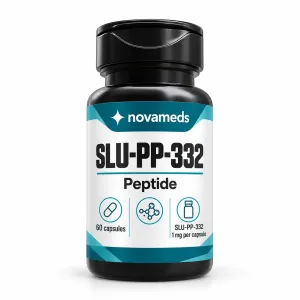
SLU-PP-332 Peptide
Currently unavailable