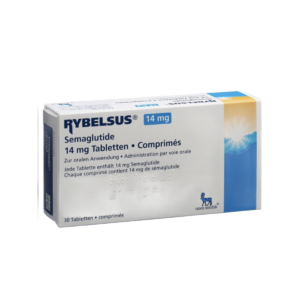
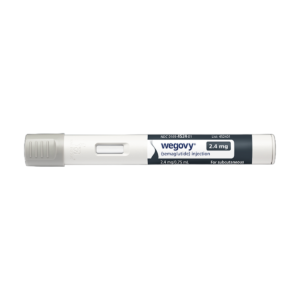
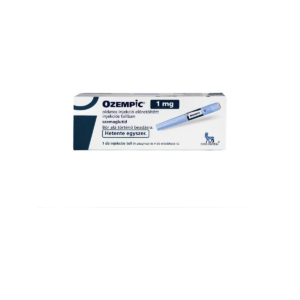
Semaglutide has been authorized both as a once-weekly injection and as a once-daily tablet. The active ingredient is the same, but the route changes almost everything else:
- absorption: only a small fraction of each tablet reaches the bloodstream;
- dose: tablet doses are therefore measured in milligrams per day, not per week;
- how it is taken: the tablet must be taken under strict fasting conditions to be absorbed reliably;
- products and uses: oral and injectable semaglutide are separate products, with different doses and authorized uses in the UK and US.
A tablet and an injection are not interchangeable simply because they contain the same molecule.
At a glance
| Oral semaglutide | Injectable semaglutide | |
|---|---|---|
| Products (type 2 diabetes) | Rybelsus (UK and US); also Ozempic tablets (US) | Ozempic |
| Products (weight management) | Wegovy tablets | Wegovy injection |
| Dosing frequency | Once daily | Once weekly |
| Typical maintenance doses | Diabetes: Rybelsus 7 mg or 14 mg, or the newer 4 mg or 9 mg tablets. Weight: Wegovy 25 mg | Diabetes: 0.5 mg to 2 mg. Weight: typically 2.4 mg |
| Absorption (bioavailability) | About 0.4% to 2%, depending on the product (US prescribing information) | About 89% (Wegovy injection, US prescribing information) |
| Conditions for taking it | Empty stomach, a little water, then at least 30 minutes without food, drink or other oral medicines | Any time of day, with or without food |
| Key outcome trials | PIONEER, SOUL (diabetes); OASIS (weight) | SUSTAIN, FLOW (diabetes); STEP, SELECT (weight) |
Sources: US prescribing information for Rybelsus/Ozempic tablets (revised January 2026) and Wegovy (revised June 2026); UK Summaries of Product Characteristics for Rybelsus (revised March 2026) and Wegovy tablets (June 2026).
Why a peptide is hard to swallow
Semaglutide is a peptide, a chain of amino acids, like insulin. See What Are Peptides? Swallowed on its own, it would be broken down by digestive enzymes and barely absorbed through the gut wall. That is why peptide medicines have traditionally been injected.
Oral semaglutide works because each tablet contains an absorption enhancer, salcaprozate sodium (SNAC).
- How SNAC helps. A study combining clinical and animal data found that absorption takes place in the stomach, close to the surface of the dissolving tablet. There, SNAC locally buffers acidity, protecting semaglutide from digestive enzymes, and briefly helps it cross the stomach lining (Buckley et al., Science Translational Medicine 2018).
- How little gets through. Estimated bioavailability is about 0.4–1% for Rybelsus tablets and about 1–2% for the newer diabetes tablets and for Wegovy tablets. For the subcutaneous injection it is about 89%.
The remaining steps follow from this.
Why the doses are higher. To reach blood levels similar to a weekly injection, the tablet has to deliver much more semaglutide. Maintenance doses are therefore 4 mg to 25 mg a day, against 0.5 mg to 2.4 mg a week by injection.
Why the rules for taking it are strict. Food, other drinks or large volumes of water in the stomach reduce absorption. The US label reports two findings:
- a single dose taken with 50 mL of water was absorbed better than one taken with 240 mL;
- waiting longer after the dose before eating increased absorption.
The instructions therefore are:
- take the tablet on an empty stomach, in the UK after at least 8 hours of fasting;
- swallow it whole with a small amount of water, up to 120 mL, about half a glass;
- wait at least 30 minutes before eating, drinking or taking other medicines by mouth.
Why individual exposure varies. Because so little is absorbed, small differences in how the tablet is taken make a proportionally larger difference. The UK product information for Rybelsus notes that oral semaglutide shows high pharmacokinetic variability. As a result, the effect of switching between oral and injectable forms “cannot easily be predicted”.
Once absorbed, semaglutide behaves the same whatever the route. It binds to albumin, has a half-life of about a week and remains in the circulation for about five weeks after the last dose.
Semaglutide tablets for type 2 diabetes
Rybelsus was the first oral GLP-1 medicine, approved by the FDA in September 2019 for glucose control in adults with type 2 diabetes.
A newer formulation. Novo Nordisk has introduced tablets with an improved formulation, absorbed more efficiently, so lower doses deliver the same exposure:
- the 1.5 mg, 4 mg and 9 mg tablets correspond to the original 3 mg, 7 mg and 14 mg;
- the UK product information states that they are bioequivalent;
- the US label reports no clinically significant difference in exposure.
The names differ between countries.
- In the UK the new tablets are authorized under the Rybelsus name.
- In the US the current label covers two brands:
- Rybelsus, in the original 3, 7 and 14 mg strengths;
- Ozempic tablets, in the new 1.5, 4 and 9 mg strengths.
The US label states that they are “not substitutable on a mg-to-mg basis”. It gives a conversion for switching only after the first month: 7 mg Rybelsus to 4 mg Ozempic tablets, and 14 mg to 9 mg.
Cardiovascular outcomes. SOUL randomized 9,650 adults with type 2 diabetes and cardiovascular disease, chronic kidney disease or both to semaglutide 14 mg tablets or placebo. Over a median of about 50 months, major adverse cardiovascular events occurred in 12.0% and 13.8% respectively (hazard ratio 0.86, 95% CI 0.77–0.96).
The two countries treat these results differently.
- In the US, the FDA added a cardiovascular risk-reduction indication for adults with type 2 diabetes at high risk in October 2025.
- In the UK, the Rybelsus license remains a type 2 diabetes indication. The SOUL results are described in the product information, but they are not an authorized indication.
Semaglutide tablets for weight management
Wegovy tablets are authorized for weight management in adults.
Doses. Treatment starts at 1.5 mg daily and increases monthly through 4 mg and 9 mg, to a 25 mg maintenance dose.
Approvals.
- The FDA approved them in December 2025. In the US they also carry the cardiovascular risk-reduction indication held by Wegovy injection.
- The MHRA authorized them on June 11, 2026 for weight management. The cardiovascular trial results are described in the product information, not authorized as an indication.
Evidence. In OASIS 4, adults with obesity, or overweight with a weight-related condition, and without diabetes lost an average of 13.6% of body weight over 64 weeks with semaglutide 25 mg, against 2.4% with placebo (intention-to-treat analysis, US prescribing information). An earlier trial, OASIS 1, tested a 50 mg daily tablet and reported 15.1% against 2.4% over 68 weeks. That dose is not authorized, and results from OASIS 1 should not be read as applying to the authorized 25 mg tablet.
Tablet versus injection. No large trial has compared Wegovy tablets directly with Wegovy injection for weight loss. The US prescribing information reports two findings on exposure:
- in people without diabetes, average semaglutide blood levels with the 25 mg tablet were similar to those with the 2.4 mg injection;
- in people with type 2 diabetes they were lower, possibly because absorption was reduced.
For people with diabetes on the tablet who need further weight loss, the US label suggests considering a switch to the injection. The differences between the Wegovy and Ozempic product families are covered in Ozempic vs Wegovy.
Switching between tablets and injections
Prescribing information allows specific switches only.
- Wegovy (UK and US). Someone on the 2.4 mg weekly injection may move to 25 mg tablets one week after the last injection. The US label also describes the reverse switch, from 25 mg tablets back to the injection.
- Diabetes products (US). Someone on Ozempic 0.5 mg injection may move to the tablets one week after the last injection: Rybelsus 7 mg or 14 mg, or Ozempic tablets 4 mg or 9 mg.
- Diabetes products (UK). The Rybelsus product information notes that oral semaglutide 9 mg gives exposure comparable to a 0.5 mg injection, while cautioning that the effect of switching is difficult to predict.
Outside these pathways, doses do not convert simply between forms. A switch is a prescribing decision.
Which form suits whom?
The trials do not identify one route as better overall, and preferences differ.
Tablets:
- avoid injections;
- depend on a strict daily routine;
- can complicate taking other morning medicines, especially those that must themselves be taken on an empty stomach.
Weekly injections:
- give more predictable absorption;
- do not depend on meal timing;
- mean one injection a week rather than a tablet every day.
Semaglutide in any form delays stomach emptying, which can affect how other oral medicines are absorbed. The prescribing information therefore recommends extra monitoring for oral drugs with a narrow therapeutic range, where small changes in blood levels matter.
The choice between forms depends on the indication, what is authorized and supplied where someone lives, and a clinician’s assessment.
Safety
Oral and injectable semaglutide have a broadly similar safety profile. The most common effects are gastrointestinal, especially during dose increases. The main warnings, including pancreatitis, gallbladder disease, low blood sugar with insulin or sulfonylureas, and the US boxed warning about thyroid C-cell tumours in rodents, are described in Ozempic vs Wegovy.
One difference is specific to the tablets. The US Wegovy label advises against breastfeeding while taking them, because SNAC and its metabolites pass into breast milk and could accumulate in infants. The injection does not contain SNAC.
Frequently asked questions
Is a semaglutide tablet as effective as the injection?
They have not been compared head-to-head in a large weight-management trial. In people without diabetes, average blood levels with Wegovy 25 mg tablets were similar to those with the 2.4 mg injection. In people with diabetes they were lower.
Why is the tablet dose so much higher than the injection?
Only about 0.4% to 2% of the semaglutide in a tablet is absorbed, compared with about 89% of an injection.
Why must semaglutide tablets be taken on an empty stomach?
Food, other drinks and larger volumes of water reduce absorption in the stomach. Waiting at least 30 minutes before eating or drinking lets more of the dose be absorbed.
Are Rybelsus and Wegovy tablets the same?
No. Both contain semaglutide, but Rybelsus is authorized for type 2 diabetes at doses up to 14 mg (or 9 mg in the newer formulation), while Wegovy tablets are authorized for weight management at 25 mg.
What are “Ozempic tablets”?
In the US, the newer semaglutide tablets for type 2 diabetes (1.5, 4 and 9 mg) are labeled as Ozempic tablets, alongside Rybelsus. In the UK the newer tablets are authorized under the Rybelsus name.
Can I switch from the injection to tablets on my own?
No. Switching follows specific schedules in the prescribing information and is a decision for the prescriber.
Are there oral GLP-1 medicines that are not peptides?
Yes. In April 2026 the FDA approved orforglipron (Foundayo), a small-molecule GLP-1 receptor agonist taken by mouth for weight management. It is a different active ingredient, not a form of semaglutide.
In summary
Oral semaglutide is a real alternative to injection, but not a simple substitute. A tablet delivers the same molecule through a very inefficient route. That means higher daily doses, strict rules for taking it, more variable absorption, and separate products with their own doses and authorized uses. In the US these include Rybelsus, Ozempic tablets and Wegovy tablets; in the UK, Rybelsus and Wegovy tablets. Whether a tablet or an injection is appropriate is a clinical decision.
Related reading: Ozempic vs Wegovy · Semaglutide vs Tirzepatide · Orforglipron (Foundayo): Clinical Evidence, Phase 3 Trials and FDA Approval
Sources and further reading
- US Food and Drug Administration. RYBELSUS and OZEMPIC (semaglutide) tablets — Prescribing Information, revised January 2026 (NDA 213051). Drugs@FDA. Source of bioavailability, water-volume and fasting data, switching tables and SOUL results.
- US Food and Drug Administration. Drugs@FDA approval history, NDA 213051: original approval September 20, 2019; new indication October 17, 2025.
- US Food and Drug Administration. WEGOVY (semaglutide) injection and tablets — Prescribing Information, revised June 2026 (NDA 215256 / 218316). Source of OASIS 4 (Study 7) figures, tablet–injection exposure comparison, switching and lactation advice.
- Novo Nordisk Limited. Rybelsus 1.5 mg tablets — Summary of Product Characteristics. emc, revised March 2026.
- Novo Nordisk Limited. Wegovy 25 mg tablets — Summary of Product Characteristics. emc, revised June 2026.
- MHRA / GOV.UK. First GLP-1 tablet for weight loss approved in the UK. June 11, 2026.
- US Food and Drug Administration. Novel Drug Approvals for 2026: Foundayo (orforglipron), approved April 1, 2026.
- Buckley ST, et al. Transcellular stomach absorption of a derivatized glucagon-like peptide-1 receptor agonist. Sci Transl Med. 2018;10(467):eaar7047. doi:10.1126/scitranslmed.aar7047
- Aroda VR, et al. PIONEER 1: randomized clinical trial of the efficacy and safety of oral semaglutide monotherapy in comparison with placebo in patients with type 2 diabetes. Diabetes Care. 2019;42(9):1724–1732. doi:10.2337/dc19-0749
- Husain M, et al. Oral semaglutide and cardiovascular outcomes in patients with type 2 diabetes (PIONEER 6). N Engl J Med. 2019;381(9):841–851. doi:10.1056/NEJMoa1901118
- McGuire DK, et al. Oral semaglutide and cardiovascular outcomes in high-risk type 2 diabetes (SOUL). N Engl J Med. 2025;392(20):2001–2012. doi:10.1056/NEJMoa2501006
- Knop FK, et al. Oral semaglutide 50 mg taken once per day in adults with overweight or obesity (OASIS 1). Lancet. 2023;402(10403):705–719. doi:10.1016/S0140-6736(23)01185-6
- Wharton S, et al. Oral semaglutide at a dose of 25 mg in adults with overweight or obesity (OASIS 4). N Engl J Med. 2025;393(11):1077–1087. doi:10.1056/NEJMoa2500969
This article is educational and does not constitute personalized treatment advice. Treatment decisions depend on individual circumstances and professional assessment.