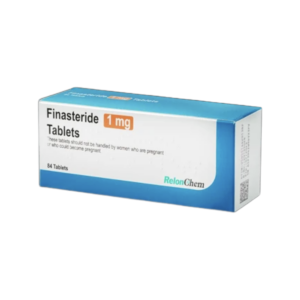
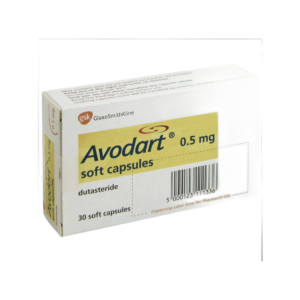
Finasteride and dutasteride are medicines belonging to a class known as 5-alpha-reductase inhibitors (5ARIs). Both reduce the conversion of testosterone into dihydrotestosterone (DHT), a hormone involved in androgenetic alopecia and benign prostatic hyperplasia.
Although they share a general mechanism, their pharmacological properties differ. Finasteride primarily inhibits type II 5-alpha-reductase, while dutasteride inhibits both type I and type II.
This distinction affects the degree of DHT suppression, the duration of drug exposure and some clinical outcomes.
Research has directly compared these medicines for male pattern hair loss and prostate enlargement. However, evidence from one condition should not automatically be applied to the other, and their approved indications vary between countries.
Understanding their differences requires examining both clinical effectiveness and safety.
Understanding Testosterone and DHT
Testosterone is an androgen involved in male reproductive development, sexual function, muscle maintenance and numerous other physiological processes.
In certain tissues, testosterone is converted into dihydrotestosterone through the action of 5-alpha-reductase.
DHT binds to androgen receptors and contributes to androgen-dependent processes in the skin, hair follicles and prostate gland.
Androgenetic Alopecia
Androgenetic alopecia, commonly called male pattern hair loss, develops through interactions between genetic susceptibility and androgen signaling.
In susceptible scalp follicles, DHT contributes to progressive follicular miniaturization.
Over successive hair-growth cycles, affected follicles produce thinner and shorter hairs, making hair loss increasingly visible.
However, DHT is not the only factor involved. Genetics, follicular sensitivity and local tissue biology also influence the progression and pattern of hair loss.
Benign Prostatic Hyperplasia
Benign prostatic hyperplasia (BPH) involves non-cancerous enlargement of the prostate.
DHT plays a role in maintaining and stimulating prostate tissue. Reducing its production can therefore lead to a gradual decrease in prostate volume.
The resulting anatomical changes may improve urinary flow and reduce the risk of complications in appropriately selected patients.
Not every case of urinary difficulty is caused by BPH, and the condition requires appropriate clinical assessment.
The 5-Alpha-Reductase Enzyme
5-alpha-reductase exists in multiple isoenzyme forms.
The two principal therapeutic targets are type I and type II.
Type I is expressed in tissues including the skin and liver, while type II is particularly relevant to the prostate and androgen-sensitive hair follicles.
Their distribution is not exclusive: both forms may occur in several tissues.
| Characteristic | Type I | Type II |
|---|---|---|
| Important expression sites | Skin, liver and other tissues | Prostate, hair follicles and reproductive tissues |
| Finasteride inhibition | Relatively limited | Primary pharmacological target |
| Dutasteride inhibition | Yes | Yes |
These differences explain why the two drugs produce different degrees of systemic DHT suppression.
Finasteride: Pharmacological Profile
Finasteride predominantly inhibits type II 5-alpha-reductase.
By reducing the conversion of testosterone into DHT, it lowers androgen signaling in tissues affected by this pathway.
At standard therapeutic doses, average serum DHT suppression is approximately 70%, although measurements vary by dose, study design and biological compartment.
Finasteride is administered orally and metabolized primarily through hepatic pathways.
Its terminal elimination half-life is approximately five to six hours in younger adult men and may be somewhat longer with increasing age.
The short plasma half-life does not mean that its biological effects disappear immediately following the last dose. Enzyme inhibition, hormonal recovery and clinical outcomes operate on different timescales.
Finasteride formulations are authorized for different indications:
- 1 mg tablets for male androgenetic alopecia in relevant markets.
- 5 mg tablets for symptomatic BPH.
These strengths should not be treated as interchangeable merely because they contain the same active ingredient.[1,2]
Dutasteride: Pharmacological Profile
Dutasteride inhibits both type I and type II 5-alpha-reductase.
This broader inhibition produces a substantial reduction in circulating DHT.
With dutasteride 0.5 mg daily, average serum DHT reductions exceeding 90% have been documented.
Its pharmacokinetic characteristics are notably different from those of finasteride.
Dutasteride is extensively metabolized through CYP3A4 and CYP3A5 pathways and has a long terminal half-life of approximately three to five weeks at therapeutic concentrations.
As a consequence, it can remain detectable in the bloodstream for several months after discontinuation.
This prolonged exposure is relevant to potential interactions, reproductive precautions and the management of adverse effects.
The 0.5 mg capsule is authorized for BPH in the UK and United States. Hair-loss authorizations differ internationally.[3]
Clinical Evidence for Hair Loss
Evidence for Finasteride
Finasteride 1 mg has been studied extensively in men with androgenetic alopecia.
Controlled clinical trials have demonstrated improvements in hair-count measurements and reductions in the progression of hair loss compared with placebo.
Its effects are generally assessed over several months rather than days or weeks.
Responses differ between individuals, and treatment does not reliably restore hair in every affected area.
Evidence also indicates that discontinuation can result in the gradual loss of treatment-associated benefits.
Direct Comparison with Dutasteride
A frequently cited randomized, active- and placebo-controlled trial published in the Journal of the American Academy of Dermatology in 2014 compared several dutasteride doses with finasteride 1 mg and placebo.
The study enrolled 917 men with androgenetic alopecia and followed them for 24 weeks.
Dutasteride 0.5 mg demonstrated greater improvement than finasteride 1 mg in the trial’s assessed hair-count and hair-width outcomes.
The findings provide direct comparative evidence of a difference in measured hair-growth outcomes at those particular doses.
However, the 24-week duration limits conclusions about very long-term effectiveness and safety.
Further systematic reviews have generally supported greater improvements in certain hair-growth outcomes with dutasteride, although the quantity and quality of available comparative evidence vary across endpoints.
These findings do not establish that every individual will obtain better results with dutasteride or that its overall benefit-risk balance is identical across patients.[4,5]
What About Topical Formulations?
Topical finasteride and experimental topical dutasteride formulations have also attracted clinical interest.
Their objectives include delivering treatment to scalp tissue while potentially altering systemic exposure.
However, topical and oral preparations cannot be assumed to have equivalent pharmacokinetics or clinical outcomes.
Regulatory status, formulation quality and supporting evidence must be assessed separately.
Research into an experimental topical solution does not establish that commercially compounded products have identical properties.
Clinical Evidence for Prostate Enlargement
Finasteride and dutasteride are established options for appropriately selected men with symptomatic BPH.
Both can reduce prostate size, improve urinary symptoms and reduce the risk of acute urinary retention or surgical intervention.
However, changes in DHT suppression do not necessarily translate into proportionally greater clinical benefit.
The EPICS Head-to-Head Trial
The Enlarged Prostate International Comparator Study (EPICS) directly compared dutasteride 0.5 mg with finasteride 5 mg in men with symptomatic BPH.
This multicentre, randomized, double-blind study included more than 1,600 participants.
After approximately one year of treatment, both medicines reduced prostate volume and improved urinary symptom scores and urinary flow measurements.
The study found no statistically significant difference between them for the principal assessed outcomes.
This distinction is important: while dutasteride produces greater circulating DHT suppression, the direct EPICS comparison did not demonstrate a corresponding clinically significant advantage for the measured BPH outcomes.
Treatment decisions therefore depend on more than the magnitude of hormone suppression alone.[6]
Regulatory Status and Approved Indications
The approved indication for a medicine depends on the relevant national authorization.
| Medicine | Relevant UK/US indications |
|---|---|
| Finasteride 1 mg | Male androgenetic alopecia |
| Finasteride 5 mg | Benign prostatic hyperplasia |
| Dutasteride 0.5 mg | Benign prostatic hyperplasia |
Dutasteride has also received authorization for male androgenetic alopecia in certain Asian markets, including Japan and South Korea.
Its use for hair loss in the UK and United States remains outside its standard authorized indication.
An off-label prescription is a clinical and regulatory concept, not evidence that a medicine has received approval for that indication.
Any discussion of off-label treatment must also account for the applicable national rules and professional responsibilities.
In addition, individual products may have different approved formulations, patient populations and safety information.
Safety and Adverse Effects
Both medicines alter androgen metabolism and can cause adverse effects.
The nature and likelihood of those effects must be considered in relation to the individual medicine, dose, indication and patient population.
Sexual Adverse Effects
Reported adverse effects include reduced libido, erectile dysfunction and ejaculatory disturbances.
These outcomes have been documented in clinical trials and post-marketing safety reports.
Persistent sexual dysfunction following finasteride discontinuation has also been reported and is reflected in regulatory safety communications.
The incidence, biological mechanisms and individual duration of persistent symptoms are not fully established.
It is therefore inaccurate either to claim that persistent symptoms are inevitable or to dismiss all such reports as psychological or nocebo-related.
Dutasteride’s longer elimination half-life also means that the substance may remain in the body for substantially longer after treatment stops.
However, pharmacokinetic persistence and the persistence of a particular adverse effect are not the same phenomenon.[2,3,7]
Psychiatric Effects and the 2025 EMA Review
Psychiatric safety is an important component of current 5-alpha-reductase inhibitor product information.
In 2025, the European Medicines Agency completed a review of suicidal ideation associated with finasteride and dutasteride.
The review confirmed suicidal ideation as an adverse effect of oral finasteride tablets, with frequency not known.
For dutasteride, the available evidence was insufficient to establish the same causal association. Nevertheless, a precautionary warning regarding potential mood changes, including suicidal thoughts, was introduced because of the medicines’ related mechanism of action.
For patients taking finasteride 1 mg for hair loss, the regulatory advice is to discontinue treatment and seek medical advice if mood changes occur.
Sexual dysfunction should also be reported to a healthcare professional, particularly when accompanied by changes in mood.
These findings should not be simplified into a claim that the psychiatric risks are identical between both medicines.[7,8]
In May 2026 the MHRA completed a further UK review of finasteride, dutasteride and suicidal thoughts and behaviours. It advised that finasteride is associated with depression, suicidal ideation and sexual dysfunction that may persist after treatment is stopped. Prescribers are asked to check for a history of depression or suicidal ideation and to review patients regularly. Men taking finasteride 1 mg should stop and contact a healthcare professional as soon as possible if they develop depression or suicidal thoughts; those taking finasteride 5 mg or dutasteride should seek advice promptly. The finasteride 1 mg product information is being updated to note that sexual dysfunction may contribute to mood disorders, and a precautionary warning on mood alterations is being added for dutasteride.[11]
Persistent Symptoms and Post-Finasteride Syndrome
The term post-finasteride syndrome is used to describe reported persistent symptoms following finasteride discontinuation, including sexual, physical and neuropsychiatric complaints.
The definition, mechanisms, frequency and causal interpretation of this proposed syndrome remain subjects of scientific debate.
Nevertheless, persistent sexual and psychiatric symptoms have been documented in safety reports and are acknowledged in relevant regulatory communications.
The uncertainty surrounding a proposed syndrome does not justify dismissing individual adverse-event reports or attributing them categorically to a nocebo effect.
Pregnancy and Reproductive Precautions
5-alpha-reductase inhibitors may interfere with the normal development of male fetal genitalia.
Consequently, the relevant oral formulations are contraindicated for use during pregnancy.
Pregnant individuals, or those who may become pregnant, should not handle crushed or broken finasteride tablets or leaking dutasteride capsules.
The integrity of the formulation matters because exposure to the active ingredient can occur if the protective coating or capsule is damaged.
Blood Donation
Product information includes blood-donation precautions intended to reduce the risk of exposing pregnant transfusion recipients.
The US prescribing information for dutasteride specifies a minimum six-month waiting period after the last dose.
Relevant finasteride guidance commonly specifies a shorter interval, but local blood-service rules and product instructions must take precedence.
Other Considerations
Additional reported effects include breast tenderness, breast enlargement and changes in semen parameters.
Patients should report breast lumps, nipple discharge or other unusual breast changes to a healthcare professional.
Potential effects on fertility may also be relevant when treatment is being considered.
PSA Monitoring and Prostate Cancer
Prostate-specific antigen (PSA) is a blood marker used as part of the clinical assessment of prostate conditions.
Both finasteride and dutasteride reduce PSA concentrations.
With sustained treatment, average PSA values may decline by approximately 50% over six months.
This means that a measured result cannot always be interpreted against standard reference values without accounting for treatment.
Interpreting PSA During Treatment
Clinicians may establish a new PSA baseline after treatment has begun and assess subsequent changes relative to that baseline.
Adjustment of a measured PSA value, including consideration of doubling it after sustained treatment, is described in relevant product information.
However, PSA interpretation must account for treatment duration, previous measurements, individual risk factors and the clinical circumstances.
A confirmed rise from the lowest PSA value during 5ARI treatment warrants evaluation, even when the result remains within the laboratory’s usual reference range.
The objective is to avoid missing clinically relevant changes because the medication has suppressed the measured biomarker.[2,3]
Prostate Cancer Prevention Evidence
The Prostate Cancer Prevention Trial investigated finasteride 5 mg in men aged 55 and older.
The trial found a reduction in overall prostate cancer diagnoses, primarily involving lower-grade cancers.
An initially observed higher proportion of high-grade diagnoses generated considerable discussion.
Subsequent analyses indicated that improved detection, partly associated with reduced prostate volume and altered test performance, could explain at least part of the difference.
Long-term follow-up did not demonstrate an overall survival disadvantage in the finasteride group.
Nevertheless, these findings should not be interpreted as a recommendation to use finasteride routinely for prostate cancer prevention.[9]
Comparison Table
| Characteristic | Finasteride | Dutasteride |
|---|---|---|
| Drug class | 5-alpha-reductase inhibitor | 5-alpha-reductase inhibitor |
| Principal enzyme targets | Type II | Type I and type II |
| Approximate serum DHT suppression | Around 70% | Above 90% |
| Terminal half-life | Approximately 5–8 hours | Approximately 3–5 weeks |
| Relevant UK hair-loss authorization | Yes, 1 mg oral formulation | No standard UK hair-loss authorization |
| BPH authorization | Yes, 5 mg | Yes, 0.5 mg |
| Hair-growth evidence | Extensive placebo-controlled data | Direct comparative trials demonstrate greater gains in selected outcomes |
| EPICS BPH comparison | Similar principal outcomes | Similar principal outcomes |
| PSA effects | Reduces PSA | Reduces PSA |
| Important safety considerations | Sexual and psychiatric effects; pregnancy precautions | Sexual effects, prolonged exposure and psychiatric precautionary warnings |
Values and clinical findings refer to specified formulations and study populations. They are not individual predictions.
Frequently Asked Questions
Does dutasteride reduce DHT more than finasteride?
At the studied therapeutic doses, dutasteride generally produces greater average suppression of circulating DHT because it inhibits both type I and type II 5-alpha-reductase.
This difference does not automatically predict the clinical response of an individual patient.
Is dutasteride approved for hair loss in the United Kingdom?
Dutasteride’s standard UK authorization is for benign prostatic hyperplasia.
Its use for androgenetic alopecia is therefore outside that authorized indication, unlike licensed finasteride 1 mg products.
Does greater DHT suppression always mean better hair growth?
No. DHT suppression is a pharmacological measurement, while hair growth is a clinical outcome affected by several factors.
Direct clinical trials provide a stronger basis for comparisons than hormone measurements alone.
Can finasteride and dutasteride be taken together?
Combining medicines that act on the same hormonal pathway requires a specific clinical rationale and professional supervision.
The comparative evidence discussed in this article does not establish the routine benefit or safety of combining them.
Do side effects disappear immediately after stopping finasteride?
Not necessarily.
Finasteride has a relatively short plasma elimination half-life, but the duration of biological effects or adverse symptoms cannot be predicted solely from that value.
Persistent symptoms have been reported and are recognized in regulatory safety communications.
Why does dutasteride remain in the body longer?
Its pharmacokinetic characteristics result in a substantially longer terminal elimination half-life.
Detectable concentrations may persist for months after treatment ends.
Can these medicines affect fertility?
Changes in semen parameters have been reported, particularly with dutasteride.
Their clinical significance varies and should be discussed with a healthcare professional when fertility is a relevant consideration.
Why must a clinician know about finasteride or dutasteride before interpreting PSA?
These medicines suppress PSA concentrations, potentially altering the interpretation of prostate screening and monitoring results.
A clinician must consider the medicine, dose, duration of treatment and previous PSA measurements.
Conclusion
Finasteride and dutasteride share an established pharmacological mechanism but differ in enzyme selectivity, degree of DHT suppression and elimination half-life.
Clinical research in androgenetic alopecia has demonstrated greater improvements in certain hair-growth outcomes with dutasteride 0.5 mg compared with finasteride 1 mg under defined trial conditions.
For benign prostatic hyperplasia, direct comparative evidence, including EPICS, has demonstrated broadly similar outcomes on principal clinical measures.
These findings should be considered alongside each medicine’s approved indications, individual response and safety characteristics.
In particular, the updated regulatory evidence concerning sexual and psychiatric adverse effects reinforces the importance of careful assessment and appropriate monitoring.
Neither the strength of DHT suppression nor a single clinical trial can independently determine the suitability of treatment for an individual patient.
Related reading: Finasteride vs Minoxidil: Different Approaches to Hair Loss
Scientific References
- Propecia 1 mg Film-Coated Tablets. UK Summary of Product Characteristics. https://www.medicines.org.uk/emc/product/2194/smpc
- Finasteride 1 mg Tablets. UK Summary of Product Characteristics. https://www.medicines.org.uk/emc/product/100138/smpc
- Avodart 0.5 mg Soft Capsules. UK Summary of Product Characteristics. https://www.medicines.org.uk/emc/medicine/11618
- Gubelin Harcha W, Barboza Martínez J, Tsai TF, et al. A randomized, active- and placebo-controlled study of the efficacy and safety of different doses of dutasteride versus placebo and finasteride in male subjects with androgenetic alopecia. Journal of the American Academy of Dermatology. 2014;70:489–498.e3. https://doi.org/10.1016/j.jaad.2013.10.049
- Lee S, et al. Adverse Sexual Effects of Treatment with Finasteride or Dutasteride for Male Androgenetic Alopecia: A Systematic Review and Meta-analysis. Acta Dermato-Venereologica. https://doi.org/10.2340/00015555-3035
- Nickel JC, Gilling P, Tammela TLJ, et al. Comparison of dutasteride and finasteride for treating benign prostatic hyperplasia: the Enlarged Prostate International Comparator Study (EPICS). BJU International. 2011;108:388–394. https://doi.org/10.1111/j.1464-410X.2011.10195.x
- Medicines and Healthcare products Regulatory Agency. Finasteride: reminder of the risk of psychiatric side effects and sexual side effects which may persist after discontinuation of treatment. April 29, 2024. Official MHRA safety communication
- European Medicines Agency. Finasteride- and dutasteride-containing medicinal products: measures to minimize risk of suicidal thoughts. Regulatory review concluded in 2025. Official EMA review
- National Cancer Institute. Prostate Cancer Prevention Trial: Questions and Answers. Official NCI information
- US FDA / DailyMed. Avodart (dutasteride): Full Prescribing Information. Official product information
- Medicines and Healthcare products Regulatory Agency. Finasteride and dutasteride – updated safety warnings for psychiatric side effects and sexual dysfunction. Drug Safety Update, May 11, 2026. Official MHRA safety communication
This article is educational and does not constitute personalized treatment advice.