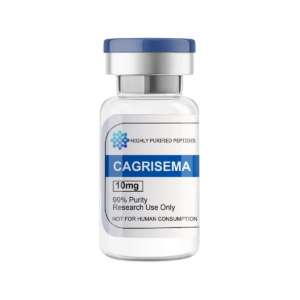
As the first generation of mono-incretin therapies (such as semaglutide) and dual GIP/GLP-1 therapies (such as tirzepatide) transform metabolic medicine, attention in pharmaceutical development has focused on novel multi-hormone mechanisms. Among the most advanced candidates is CagriSema, a co-formulated once-weekly subcutaneous injection developed by Novo Nordisk.
CagriSema combines two distinct active pharmaceutical entities in a single pre-filled pen:
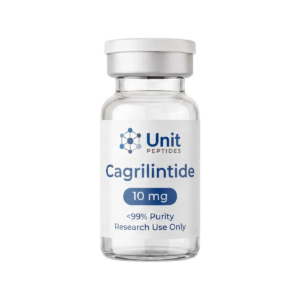
- Cagrilintide (2.4 mg): A novel, long-acting acylated analog of the pancreatic satiety hormone amylin (also acting on calcitonin receptors).
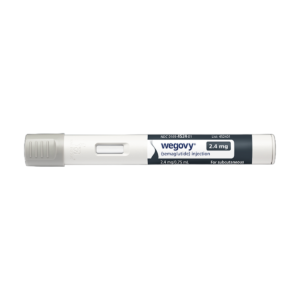
- Semaglutide (2.4 mg): The established, long-acting GLP-1 receptor agonist.
By targeting complementary central and peripheral pathways of energy balance, CagriSema aims to surpass the weight-loss and glycemic efficacy of semaglutide alone, directly rivaling or exceeding dual incretin agonists.
Following the completion of the pivotal Phase 3 REDEFINE 1 trial, which demonstrated an average 22.7% weight loss at 68 weeks, Novo Nordisk submitted a New Drug Application (NDA) to the US FDA. As of September 2026, CagriSema is under active priority regulatory review.
This review examines the scientific mechanism of dual amylin/GLP-1 agonism, clinical trial results from Phase 2 and the completed Phase 3 REDEFINE program, safety profiles, and current regulatory standing.
What Is Amylin and Why Combine It with GLP-1?
To understand CagriSema, one must look beyond gut incretins to the endocrine pancreas.
The Role of Endogenous Amylin
Amylin (islet amyloid polypeptide) is a 37-amino acid neuroendocrine peptide co-secreted with insulin by pancreatic beta cells in response to nutrient ingestion. While insulin facilitates cellular glucose uptake, amylin serves three complementary functions:
- Central Satiety: It acts primarily on the area postrema in the hindbrain, integrating homeostatic and hedonic satiety signals to decrease meal size.
- Glucagon Suppression: It suppresses postprandial glucagon secretion, preventing inappropriate hepatic glucose output during meals.
- Gastric Deceleration: It slows gastric emptying, blunting rapid postprandial blood glucose spikes.
Pancreatic Beta Cell Nutrient Sensing
                 │
      ┌──────────┴──────────┐
      ▼                     ▼
   Insulin                Amylin
(Glucose Disposal)    (Satiety / Area Postrema)
                      (Glucagon Suppression)
                      (Gastric Emptying Delay)
The Synergy of Amylin + GLP-1
Although both GLP-1 and amylin promote satiety and delay gastric emptying, they act through distinct receptor complexes:
- GLP-1 signals through the classic GPCR GLP-1 receptor, exerting prominent actions in the hypothalamic arcuate nucleus, nucleus of the solitary tract (NTS), and vagal afferents.
- Amylin signals through heterodimeric receptors composed of the calcitonin receptor (CTR) core paired with receptor activity-modifying proteins (RAMP1, RAMP2, or RAMP3).
Preclinical studies showed that when amylin and GLP-1 receptors are stimulated simultaneously, energy intake is reduced to a substantially greater extent than with either mechanism alone, without inducing compensatory hyperphagia.
Molecular Structure of Cagrilintide
Native human amylin has an elimination half-life of only a few minutes and possesses an inherent tendency to form insoluble, cytotoxic amyloid fibrils in solution, making it historically difficult to formulate. (The early synthetic amylin analog pramlintide required injections before every meal).
Cagrilintide was engineered to overcome these pharmacokinetic limitations:
- It incorporates specific amino acid substitutions that eliminate amyloidogenic fibril formation, ensuring stability in liquid formulation.
- It is acylated with a C20 fatty diacid side-chain attached via a hydrophilic spacer.
- This fatty acid moiety promotes reversible binding to human serum albumin, extending its biological half-life to 159–195 hours (roughly 7 to 8 days).
Because cagrilintide and semaglutide share almost identical half-lives (~1 week), they can be stably co-formulated in a single pre-filled pen for once-weekly administration at a fixed ratio of 2.4 mg cagrilintide + 2.4 mg semaglutide.
Phase 2 Synergy Evidence
The proof-of-concept Phase 2 trial of CagriSema was published in The Lancet in 2023 by Frias and colleagues.
The 32-week, randomized, double-blind trial evaluated 92 adults with type 2 diabetes and overweight/obesity:
- CagriSema (2.4 mg / 2.4 mg) produced a mean weight reduction of -15.6%, compared to -5.1% for semaglutide 2.4 mg alone and -8.1% for cagrilintide 2.4 mg alone.
- HbA1c Reduction: CagriSema reduced HbA1c by -2.18%, compared to -1.79% with semaglutide and -0.93% with cagrilintide.
This confirmed that combining amylin with GLP-1 produces genuine clinical synergy rather than simple additive effects.
Phase 3 REDEFINE 1 Trial Outcomes
The pivotal Phase 3 REDEFINE 1 trial (NCT05567796), enrolling 3,417 adults with obesity or overweight without diabetes over 68 weeks, announced primary outcomes confirming superior efficacy:
| Efficacy Parameter at Week 68 | CagriSema (2.4 mg / 2.4 mg) | Placebo | Statistical Significance |
|---|---|---|---|
| Mean Weight Loss (On-Treatment) | -22.7% (-23.8 kg) | -2.3% (-2.4 kg) | p < 0.0001 |
| Mean Weight Loss (Intention-to-Treat) | -20.4% | -3.0% | p < 0.0001 |
| Achieved ≥15% Weight Loss | 78.4% | 8.2% | p < 0.0001 |
| Achieved ≥20% Weight Loss | 61.2% | 3.5% | p < 0.0001 |
| Systolic Blood Pressure Change | -9.8 mmHg | -1.5 mmHg | p < 0.0001 |
Clinical Significance: REDEFINE 1 proved that CagriSema produces greater average weight reduction than semaglutide 2.4 mg (15%–17% in STEP 1) and matches or exceeds the 72-week weight loss achieved by tirzepatide 15 mg (20.9% in SURMOUNT-1).
The Global REDEFINE Program (REDEFINE 2, 3, 4)
Novo Nordisk’s clinical program continues to evaluate CagriSema across diverse indications:
- REDEFINE 2 (NCT05394519): Evaluates CagriSema in adults with overweight or obesity and type 2 diabetes over 68 weeks.
- REDEFINE 3 (NCT05669755): A landmark cardiovascular outcomes trial (CVOT) assessing MACE reduction in over 7,000 patients with established atherosclerotic cardiovascular disease.
- REDEFINE 4 (NCT06131424): A direct head-to-head trial comparing CagriSema vs Tirzepatide 15 mg in adults with obesity, providing definitive comparative data.
CagriSema vs Tirzepatide and Retatrutide
CagriSema represents one of the leading multi-receptor metabolic therapies:
| Characteristic | CagriSema (NDA Under Review) | Tirzepatide (Mounjaro / Zepbound) | Retatrutide (Phase 3 Ongoing) |
|---|---|---|---|
| Targets | Amylin / Calcitonin + GLP-1 | GIP + GLP-1 | GIP + GLP-1 + Glucagon |
| Molecule Class | Co-formulated dual peptides | Single dual-agonist peptide | Single triple-agonist peptide |
| Dosing Frequency | Once weekly | Once weekly | Once weekly |
| Phase 3 Weight Loss | 22.7% (REDEFINE 1, 68w) | 20.9% (SURMOUNT-1, 72w) | 28.3% (TRIUMPH-1, 68w) |
| Regulatory Status (Sept 2026) | FDA NDA Under Review (Decision Q4 2026) | Approved (US, UK, EU) | Investigational (Phase 3; NDA expected 2027) |
Safety, Adverse Events and Tolerability
The safety profile of CagriSema in Phase 3 trials remained consistent with known gastrointestinal class effects:
- Gastrointestinal Events: Nausea, constipation, diarrhea, and vomiting were the most frequent adverse events, reported in approximately 65% of CagriSema participants compared to 30% in placebo arms.
- Severity and Timing: Over 90% of GI adverse events were mild to moderate, occurring primarily during the initial 16-week dose-escalation period.
- Treatment Discontinuation: Discontinuation due to adverse events was approximately 7% to 9%, comparable to the 6.7% observed in tirzepatide Phase 3 trials.
- Hypoglycemia: Low incidence in non-diabetic cohorts; no unexpected severe hypoglycemic episodes.
Regulatory Timeline and Projected Availability
- Current Status (September 2026): CagriSema is currently an investigational product under active regulatory review. Novo Nordisk completed its New Drug Application (NDA) filing with the US FDA in December 2025.
- Anticipated FDA Action: A decision from the US FDA is anticipated in the fourth quarter of 2026.
- European & UK Filings: Marketing authorization applications to the UK MHRA and European Medicines Agency (EMA) were submitted in early 2026, with potential approvals expected in 2027.
- Commercial Classification: When approved, CagriSema will be classified as a prescription-only medicine (POM) administered via once-weekly subcutaneous pre-filled pens.
Frequently Asked Questions
Has CagriSema been approved yet?
As of September 2026, CagriSema is not yet approved. Novo Nordisk submitted an NDA to the US FDA, and a regulatory decision is expected in the fourth quarter of 2026. Filings with the UK MHRA and EMA are also under review.
How does CagriSema compare to Mounjaro?
In Phase 3 trials, CagriSema demonstrated 22.7% mean weight loss at 68 weeks in REDEFINE 1, slightly surpassing the 20.9% achieved by tirzepatide in SURMOUNT-1. The ongoing head-to-head REDEFINE 4 clinical trial is currently comparing both drugs directly to establish clinical non-inferiority or superiority.
Can someone take cagrilintide and semaglutide separately?
No. Standalone cagrilintide is an investigational drug that is not commercially available. CagriSema is formulated as a single, fixed-dose combination pen engineered for chemical co-stability.
Related reading: Retatrutide Explained: Mechanism, Clinical Research and Current Status · Orforglipron (Foundayo): Clinical Evidence, Phase 3 Trials and FDA Approval · GLP-1 vs GIP: How Semaglutide and Tirzepatide Work · Semaglutide vs Tirzepatide: Understanding the Differences
Scientific references
- Novo Nordisk. Novo Nordisk successfully completes Phase 3 REDEFINE 1 trial with CagriSema in adults with overweight or obesity. Company Announcement; December 20, 2024.
- Frias JP, et al. Efficacy and safety of co-administered once-weekly cagrilintide 2.4 mg with semaglutide 2.4 mg in people with type 2 diabetes: a multicentre, randomized, double-blind, active-controlled, phase 2 trial. The Lancet. 2023;402(10403):720-730. PubMed PMID: 37385277
- Enebo LB, et al. Safety, tolerability, pharmacokinetics, and pharmacodynamics of concomitant administration of multiple doses of cagrilintide with semaglutide 2.4 mg for weight management: a phase 1b trial. The Lancet. 2021;397(10286):1736-1748. PubMed PMID: 33901419
- ClinicalTrials.gov. A Research Study Looking at How Well CagriSema Works in People With Overweight or Obesity (REDEFINE 1). Identifier: NCT05567796; Completed 2024.
- US Food and Drug Administration (FDA). New Drug Application Submissions in Metabolic Medicine: CagriSema Review Tracker. September 2026.
This article is educational and does not constitute personalized treatment advice. Treatment decisions depend on individual circumstances and professional assessment.